
SPEAKER BIOS


Oforiwaa Pee Agyei-Boakye is a Geography Ph.D. student at the University of Minnesota. She is also a GIS and data analytics consultant at Gonigs Inc. She is a former Appalachian Trails Conservancy (ATC) NextGen Advisory Council member, an American Trails Association Hulet Hornbeck Emerging Trails Leader, and was part of the 2017 World Trails Network Trail Visionaries Expedition Team to Tottori, Japan. She coordinated the equity map sessions of the 2021 Appalachian Trails Conservancy (ATC) Emerging Leaders’ Summit.
Raya Idrissa Ahmada is an Assistant Lecturer at the State University of Zanzibar (SUZA), a mentor and student advisor. She is very passionate about data science and is researching in the areas of open source GIS tools, database administration and data analysis and web application development. She is also keen in mentoring the students to come up with innovative ideas to solve existing problems in the community. She has worked with students in several development projects such as the STEM for Success Project Zanzibar, as a technical assistant with Kiokit (a digital classroom technology), and with the Resilience Academy (https://resilienceacademy.ac.tz/) as an internship coordinator to help equip the youths with the tools, knowledge and skills to ensure resilient urban development. She is also the faculty mentor for the SUZA YouthMapper’s chapter (https://www.youthmappers.org/). She is currently a Youthmappers Regional Ambassador in Tanzania and She is leading the ZHErTech Initiative at SUZA with the aim of helping young girls to excel in technology. She has been part of the team in the Partnership Enhanced blendedLearning (PEBL) sponsored by the Association of Commonwealth Universities (ACU) and has led the development of the Web Technologies module currently in the OER Africa. Raya is also the E-learning and Curriculum expert under the GeoICT4e project which focuses on improving geospatial and ICT education in Tanzania (https://www.oph.fi/en/projects/geoict4e).

Airin Akter is currently working as an ESM ( Every Where She Maps) Regional Ambassador in YouthMappers. She completed her Master’s and Bachelor of Science in Geography and Environment, University of Dhaka. She has been with YouthMappers Dhaka University Chapter since the first step of it in 2016. She has achieved YouthMappers Research Fellowship,2018 award fully funded by USAID and YouthMappers. She has skills in implementing research methodology, assisting in data management, and analyzing the results of the research. Her educational background and experiences reflect a commitment and ability to plan, design, and implement research activities, training management, mapping project, and communication with local level people. Her interests include Disaster Risk Management, Gender inequality, climate and climate resilience, sustainable development, and humanitarian mapping. Follow her @Airinnila.

Andrea d’Amato, AICP has BS and a MS in Geography with over 30 years of experience in transportation program management and land use planning and has held several executive management positions in both the public and private sectors. As the Assistant Secretary for Operational Excellence at MassDOT, she has focused on improving operational performance among and between the Highway, Transit and Registry departments in the Commonwealth. Notable projects include: streamlining design procurement and project management at the MBTA; creating an integrated transit and highway construction coordination program “Plan Ahead’ to effectively plan, manage and mitigate multi-agency construction to minimize disruptions to the traveling public; streamlining the suspension hearing process at the Registry; developed and implemented a multi-agency real time and advanced notification program for the Chelsea Street Bridge for maritime and roadway users; and most recently, developing comprehensive training for project managers and support staff in highway, planning, MBTA and Rail to plan, manage and execute virtual public meetings that breaks down barriers to access for underserved populations. Andrea chairs the Transportation Research Board’s Strategic Management committee and co-chaired TRB’s Equity in Transportation conference. She was recently honored by WTS with the Leadership Award this January.

The Rev. Dr. William J. Barber II is the President & Senior Lecturer of Repairers of the Breach, Co-Chair of the Poor People’s Campaign: A National Call For Moral Revival; Bishop with The Fellowship of Affirming Ministries; Visiting Professor at Union Theological Seminary; Pastor of Greenleaf Christian Church (Disciples of Christ) in Goldsboro, North Carolina, and the author of four books: We Are Called To Be A Movement; Revive Us Again: Vision and Action in Moral Organizing; The Third Reconstruction: Moral Mondays, Fusion Politics, and The Rise of a New Justice Movement; and Forward Together: A Moral Message For The Nation.
Rev. Dr. Barber is also the architect of the Moral Movement, which began with weekly Moral Monday protests at the North Carolina General Assembly in 2013 and recently relaunched again online in August 2020 under the banner of the Poor People’s Campaign. In 2018, Rev. Dr. Barber helped relaunch the Poor People’s Campaign—which was begun by Rev. Dr. Martin Luther King Jr. in 1968—starting with a historic wave of protests in state capitals and in Washington, D.C., calling for a moral agenda and a moral budget to address the five interlocking injustices of systemic racism, systemic poverty, the war economy and militarism, ecological devastation and denial of healthcare, and the false moral narrative of Christian nationalism. There are currently 45 state coordinating committees across the country, mobilizing around the Poor People’s Jubilee Platform and We Must Do M.O.R.E. (mobilize, organize, register, and educate people for a movement that votes).

Lucas Belury has a passion for building a sustainable and equitable world through strategic partnerships and an activist-centered geographic perspective. He teaches at national community development and affordable housing conferences and has published on the colonias of the Rio Grande Valley, environmental justice and informal survival practices. His research focuses on environmental racism, informality and economic precarity. In August 2020 Lucas completed his Master of Science in Geography from George Washington University- his thesis focused on the connection between environmental racism, predatory lending, and economic precarity in the colonias of the Rio Grande Valley. For the last 5+ years he has worked at NeighborWorks America, a national affordable housing and community development non-profit. Through this role, he uses data analytics and GIS to advance the community development and affordable housing efforts of diverse stakeholders. His philosophy is centering local knowledge by empowering communities through data democratization, bottom-up policy solutions, and knowledge sharing.

Rafe has experience of naming and addressing from the United Kingdom and Australia ensuring compliance to relevant policies, procedures, legislation, and best practices. Rafe is determined to protect communities and preserve our cultural identity through place naming.

Mr. Samuel 'Dave' Birchett has been with NGA since 2003. In that time he has worked in a variety of analytic and liaison positions focusing primarily on strategic warning and WMD issues. From 2017-2020 he was assigned to the US Embassy in London as NGA's senior representative to the United Kingdom. At the conclusion of that assignment he signed on as NGA's first national GEOINT officer for economic security, threat finance, and climate change issues. Mr. Birchett currently resides in St. Louis, MO with his wife and two daughters.

Matthew Bonds is an associate professor of global health and social medicine at Harvard Medical School, and co-founder & scientific director of PIVOT. He holds a PhD in economics and a PhD in (disease) ecology from the University of Georgia. His research focuses on 1) the ecology of poverty and economic development; 2) infectious disease modelling, and 3) the science of implementing global health delivery systems. PIVOT works with the Madagascar government to establish a district level model health system. With novel data systems at all levels of care (community, primary and secondary care), this partnership aims to pioneer a new a science of health system transformation, with some of the most rigorously evaluated population level impacts in Africa. His work has been supported by a K01 Award from the NIH Fogarty International Center, a Scholar Award in Complex Systems Science from the James S. McDonnell Foundation, and a Rainer Arnhold Fellowship from the Mulago Foundation.

Gavin Bridge is Professor of Economic Geography at Durham University and a Fellow of the Durham Energy Institute. His research addresses questions of property, access, and control associated with emergent geographies of resource production and consumption, including the political ecologies of resource scarcity and security. Recent work includes research on raw material production networks associated with old and new carbon economies; and a continuing interest in how the materiality of resources shapes their appropriation and capitalisation. He is the author of Oil (Polity, 2017) with P. Le Billon; co-editor of the Routledge Handbook of Political Ecology (2015) with T. Perreault and J. McCarthy; and co-author of Energy and Society: A Critical Perspective (Routledge, 2018) with S. Barr, S. Bouzarovski, M. Bradshaw, E. Brown, H. Bulkeley, and G. Walker.

Xavier (Xav) de Souza Briggs is a senior fellow in the Brookings Institution’s Metropolitan Policy Program and a visiting fellow at the SNF Agora Institute on democracy at Johns Hopkins University. Xav is an expert on economic opportunity and inclusive growth, racial equity and pluralism, housing, urban and regional development, and democratic governance in the U.S. and abroad. An award-winning educator and researcher, he is also an experienced manager in philanthropy and government, having served as associate director of the White House Office of Management & Budget under President Obama and later as Vice President of the Ford Foundation.

Dr. Kristen Broady is a Fellow at the Brookings Metropolitan Policy Program. She previously served on the faculties of Howard University, Alabama A&M University, Dominican University, Fort Valley State University, and Kentucky State University and as a visiting faculty member at Jiangsu Normal University in Xuzhou, China during the summer of 2019. Dr. Broady served as a consultant for the Joint Center for Political and Economic Studies in Washington, D.C.; a senior research fellow for the Center for Global Policy Solutions in Washington, D.C.; a consultant for the City of East Point, Georgia and as an HBCU consultant for season two of The Quad on Black Entertainment Television (BET) in Atlanta. Her areas of research include mortgage foreclosure risk, labor and automation, and racial health disparities. She earned a B.A. in criminal justice at Alcorn State University and an MBA and Ph.D. in business administration with a major in economics at Jackson State University.

Solution Engineer at Esri supporting both the Global Infrastructure and Racial Equity Unified Teams.

Harriet Bulkeley FAcSS FBA undertook her PhD at the University of Cambridge and holds joint appointments as Professor in the Department of Geography, Durham University, and at the Copernicus Institute of Sustainable Development, Utrecht University. Her research focuses on environmental governance and the politics of climate change, energy, nature and sustainable cities and has been included in the Highly Cited Researchers list of the top 1% of researchers internationally four times since 2016. Harriet coordinated the H2020 NATURVATION project from 2016 – 2021 examining the role of urban innovation with nature-based solutions for sustainable development. She has undertaken commissioned research for the UK Government, European Commission, NGOs, UN-Habitat, the OECD and the World Bank. In 2014, Harriet was awarded the King Carl XVI Gustaf’s Professorship in Environmental Science and a Visiting Professorship at Lund University, Sweden and in 2018 was granted the Back Award by the Royal Geographical Society in recognition of the policy impact of her work on climate change. In 2019, she was elected as a Fellow of the Academy of the Social Sciences and as a Fellow of the British Academy.

Dara works as YouthMappers Communications Specialist. She manages YouthMappers’ social media and supports the planning and organization of virtual engagement activities for the network. Dara is passionate about youth development and truly believes that ‘mapping brings us together.’

Karen Chapple, PhD, is the inaugural Director of the School of Cities at the University of Toronto, where she also serves as Professor in the Department of Geography and Planning. She is Professor Emerita of City & Regional Planning at the University of California, Berkeley, where she served as department chair and held the Carmel P. Friesen Chair in Urban Studies. Chapple studies inequalities in the planning, development, and governance of regions in the U.S. and Latin America, with a focus on economic development and housing.

Kate Chinn is the Head of Community and Civic Engagement for AB. Since joining the firm in 2018, she has led the development of a new corporate philanthropy strategy globally, and she oversees the firm’s corporate giving, community engagement and civic responsibility activities. Prior to joining AB, Chinn served as a senior vice president at the Nashville Area Chamber of Commerce from 2015 to 2018, overseeing investor relations and marketing, and executing a $22 million economic-development campaign for the city. From 2007 to 2015, she served as senior director of marketing at Rockefeller Center in New York City, directing the brand positioning and growth strategies for Rockefeller Center, Top of the Rock Observation Deck and the historic Rainbow Room’s multiyear renovation in 2014. Chinn graduated Phi Beta Kappa and holds a BA in English from the University of North Carolina at Chapel Hill. Originally from Nashville, she returned in 2015 after 16 years in New York City, and she currently serves on the board of directors for the YMCA of Middle Tennessee and Harpeth Hall School. Originally from Nashville, she returned in 2015 with her husband and 3 children after 16 years in New York City.
Dr. Karilyn Crockett’s research focuses on large-scale land use changes in twentieth century American cities and examines the social and geographic implications of structural poverty and race. Karilyn’s book ""People before Highways: Boston Activists, Urban Planners, and a New Movement for City Making"" (UMASS Press 2018) investigates a 1960s era grassroots movement to halt urban extension of the U.S. interstate highway system and the geographic and political changes in Boston that resulted. Karilyn holds a PhD from the American Studies program at Yale University, a Master of Science in Geography from the London School of Economics, and a Master of Arts and Religion from Yale Divinity School. Karilyn served for four years with the Mayor's Office of Economic Development as the Director of Economic Policy & Research and the Director of Small Business Development for the City of Boston. She recently completed her service as the City of Boston's first Chief of Equity, a Cabinet-level position Mayor Walsh established to embed equity and racial justice into all City planning, operations, and work moving forward. She holds a faculty appointment as professor of urban history, public policy and planning in MIT's Department of Urban Studies & Planning. Karilyn’s career mission is to continue to work at the nexus of education, economic development policy and urban revitalization.
Isadora Cruxên is a PhD candidate in International Development at the Massachusetts Institute of Technology. She studies the political economy of sustainable development, with a focus on the relationship between financialization and the governance of essential urban infrastructures and natural resources in the Global South. She is also interested in exploring more democratic, sustainable, and just forms of public decision-making and policy-making. Her other work has engaged issues such as participatory planning, social activism, and feminist organizing. At MIT, she is affiliated with the Data+Feminism Lab and the City Infrastructure Equity Lab (CIEL). Isadora holds a Bachelor’s degree in Political Science from the University of Brasília, Brazil, and a Master in City Planning from MIT.

Gavin Bridge is Professor of Economic Geography at Durham University and a Fellow of the Durham Energy Institute. His research addresses questions of property, access, and control associated with emergent geographies of resource production and consumption, including the political ecologies of resource scarcity and security. Recent work includes research on raw material production networks associated with old and new carbon economies; and a continuing interest in how the materiality of resources shapes their appropriation and capitalisation. He is the author of Oil (Polity, 2017) with P. Le Billon; co-editor of the Routledge Handbook of Political Ecology (2015) with T. Perreault and J. McCarthy; and co-author of Energy and Society: A Critical Perspective (Routledge, 2018) with S. Barr, S. Bouzarovski, M. Bradshaw, E. Brown, H. Bulkeley, and G. Walker.

Gavin Bridge is Professor of Economic Geography at Durham University and a Fellow of the Durham Energy Institute. His research addresses questions of property, access, and control associated with emergent geographies of resource production and consumption, including the political ecologies of resource scarcity and security. Recent work includes research on raw material production networks associated with old and new carbon economies; and a continuing interest in how the materiality of resources shapes their appropriation and capitalisation. He is the author of Oil (Polity, 2017) with P. Le Billon; co-editor of the Routledge Handbook of Political Ecology (2015) with T. Perreault and J. McCarthy; and co-author of Energy and Society: A Critical Perspective (Routledge, 2018) with S. Barr, S. Bouzarovski, M. Bradshaw, E. Brown, H. Bulkeley, and G. Walker.

A landscape architect by training, Jack Dangermond founded Environmental Systems Research Institute (Esri) in 1969 with a vision that computer mapping and analysis could help design a better future. Under Dangermond's leadership, that vision has continued to guide Esri in creating cutting-edge GIS and Geodesign technologies used in every industry to make a difference worldwide.
Dangermond fostered the growth of Esri from a small research group to an organization recognized as the world leader in GIS software development. Esri employs more than 4,000 people worldwide; many who shared his passion for GIS in the early days are still with the company and remain dedicated to helping our users be successful.
Dangermond’s vision for Esri goes beyond building the leading GIS technology. He keeps the company mindful of global challenges and the needs of specific industries. The ongoing drive is to engineer ArcGIS to aggregate and integrate increasing quantities of data, to visualize and analyze the data to gain holistic understanding, and to help individuals and organizations make impactful evidence-based decisions.
William Maxfield Denevan was born in San Diego in 1931. He has B.A, M.A., and Ph.D degrees in Geography from the University of California, Berkeley. He is Professor Emeritus of Geography and also Environmental Studies at the University of Wisconsin-Madison. His research interests are in the historical ecology of the native peoples of the Americas. Field work has primarily been conducted in Nicaragua, Bolivia, Peru, and Venezuela, especially in western Amazonia and the Central Andes. Innovative research includes prehistoric earthworks, the size of the Indian population in 1492, causes of terrace abandonment, tropical deforestation, and the “pristine myth” of environmental impacts prior to European arrival. Previous honors include elected member of the American Academy of Arts and Sciences.

Michelle Dunstan is AllianceBernstein’s Chief Responsibility Officer and a member of the firm’s Operating Committee. She oversees AB’s corporate responsibility practices and responsible investing strategy, including integrating environmental, social and governance (ESG) considerations throughout the firm’s research, engagement and investment processes. Ms. Dunstan also oversees the firm’s ESG thought leadership and product development. She manages AB’s Global ESG Improvers Strategy, which focuses on engaging with and investing in companies that are advancing along ESG dimensions. Ms. Dunstan was AB’s global head of responsible investing from 2020 to 2021. From 2012 to 2020, she was a portfolio manager for the Global Commodity Equity Fund. She joined AB in 2004 as a research analyst and covered commodities in emerging markets and North America for several years. Prior to joining the firm, Ms. Dunstan was an engagement manager at the Monitor Group (now Monitor Deloitte). She holds a BCom from Queen’s University in Canada and an MBA from Harvard Business School, where she graduated with high distinction as a Baker Scholar.


Diego Gonzalez Ferreiro is currently the Data Lead and Unite Maps Product Manager at the United Nations Global service Centre (UNGSC) based in Brindisi, Italy. He manages a team of GIS professionals delivering geospatial services and products to end users at United Nations Peacekeeping and Political missions. For the last ten years, he has worked as a GIS Officer in various UN missions, such as Somalia, Kenya and DR Congo. Previously he worked in a environmental consultancy in Madrid, Spain, where he studied. He holds a Bachelor’s degree in Geography and a Masters degree in Geodesy and Cartography.

Kenan Fikri is a scholar of geographic inequality and Research Director at the Economic Innovation Group (EIG), a DC-based think tank dedicated to forging a more dynamic and inclusive U.S. economy. Kenan has cultivated a passion for place and economic development as a proud alum of the Brookings Institution, The World Bank, London School of Economics, and American University.

Siobhan Finnerty recently completed her Master of Arts in International Relations at the University of Chicago, where her research investigated the dynamic intersection between development, conflict, and political stability. Siobhan currently works as a GIS Analyst for HIP Consult, a boutique international consulting firm, where she leverages geospatial data insights to inform investment into digital infrastructure in emerging markets.
She completed her undergraduate at the George Washington University in Washington, DC with degrees in International Affairs and Geography. During her undergraduate, Siobhan also studied at the University of Vienna and earned a summer-term fellowship to study in Moscow and Saint Petersburg.

Carolyn Finney, PhD is a storyteller, author and a cultural geographer who is grounded in both artistic and intellectual ways of knowing - she pursued an acting career for eleven years, but five years of backpacking trips through Africa and Asia, and living in Nepal changed the course of her life. Motivated by these experiences, Carolyn returned to school after a 15-year absence to complete a B.A., M.A. (gender and environmental issues in Kenya and Nepal) and a PhD (where she was a Fulbright and a Canon National Science Scholar Fellow). Along with public speaking, writing, media engagements, consulting & teaching, she served on the U.S. National Parks Advisory Board for eight years. Her first book, Black Faces, White Spaces: Reimagining the Relationship of African Americans to the Great Outdoors was released in 2014. Recent publications include Self-Evident: Reflections on the Invisibility of Black Bodies in Environmental Histories (BESIDE Magazine, Montreal Spring 2020), and The Perils of Being Black in Public: We are all Christian Cooper and George Floyd (The Guardian, June 3rd 2020). She is currently working on a performance piece about John Muir (The N Word: Nature Revisited) as part of an Andrew W. Mellon residency at the New York Botanical Gardens Humanities Institute and is the new columnist at the Earth Island Journal. She is also an artist-in-residence in the Franklin Environmental Center at Middlebury College.

Alex Flachsbart is the Founder and CEO of Opportunity Alabama, a nationally recognized nonprofit organization focused on generating economic development in Alabama’s distressed communities. Prior to OPAL, Alex’s professional career spanned from practicing tax and economic development law at Balch & Bingham LLP – to teaching high school geometry in Mosses, Alabama through Teach for America. A native of Northern California (but a naturalized Alabamian), Alex received undergraduate and masters degrees in economics from The University of Alabama and a J.D. from Washington and Lee University School of Law. Alex serves on the board of Main Street Alabama and the PARCA Roundtable, is a fellow in the Blackburn Institute and the Alabama Leadership Initiative, is a member of the Birmingham Rotary Club, and was recently named one of the Top 100 national influencers in Commercial Real Estate by the Business Journals of America.

Dania V. Francis is Assistant Professor of Economics at UMass Boston. Her current research involves using experimental and quasi-experimental methods to identify structural causes of racial and socioeconomic academic achievement gaps. More broadly, Professor Francis’ research interests include examining racial and socioeconomic disparities in education, wealth accumulation, and labor markets. Dr. Francis received her doctorate from Duke University and also holds a master’s degree from Harvard University and a bachelor’s degree from Smith College. She is a board member of the National Economics Association and a National Academies of Education/Spencer Foundation Postdoctoral Fellow. Dr. Francis has been featured on CNBC International and TRT World and her work has been written about in several major publication outlets.

Arturo Franco is a development economist and strategy consultant. His career combines high-level positions in Fortune 500 corporations and global organizations, with public policy and international development experience.
Before joining Mastercard, Arturo was a senior advisor for McKinsey & Company’s global public and social policy practice and executive director of the Planning Council of the State of Nuevo Leon, where he also served as Undersecretary. Over the past years, Arturo has been Global Leadership Fellow for Latin America at the World Economic Forum, economics research fellow at Harvard University’s Center for International Development, nonresident senior fellow at the Atlantic Council and a member of the International Institute for Strategic Studies.
Arturo holds economics degrees from Monterrey Tec in Mexico and Harvard’s Kennedy School of Government, where he was also vice chair of the Alumni Board. His essays and books have been published by the Brookings Institution, the Woodrow Wilson Center for International Scholars, the Atlantic Council, and the Policy Network.

Stephanie von Friedeburg is IFC’s first Senior Vice President, Operations. She most recently stewarded the institution in the midst of the pandemic and led the implementation of IFC’s strategy to create projects, attract private investment, and support a resilient, inclusive recovery in emerging markets. She currently leads IFC’s investment operations and advisory services and manages IFC’s $60 billion debt and equity portfolio in more than 100 countries. Her priorities include increasing opportunities for women, scaling up investments to fight climate change, and promoting digital development. Her career spans three decades at the World Bank Group. She started at IFC, where she also served as the first Chief Operating Officer, and has spent more than two decades in investment operations. In addition to an MBA from the Wharton School, she holds a Master of Arts from the Lauder Institute at the University of Pennsylvania and an undergraduate degree from Georgetown University.

Edward Glaeser is the Fred and Eleanor Glimp Professor of Economics and the Chairman of the Department of Economics at Harvard University, where he has taught microeconomic theory, and occasionally urban and public economics, since 1992. He has served as Director of the Taubman Center for State and Local Government, and Director of the Rappaport Institute for Greater Boston. He has published dozens of papers on cities economic growth, law, and economics. In particular, his work has focused on the determinants of city growth and the role of cities as centers of idea transmission. He received his PhD from the University of Chicago in 1992. His books include Cities, Agglomeration, and Spatial Equilibrium (Oxford University Press, 2008), Rethinking Federal Housing Policy (American Enterprise Institute Press, 2008), Triumph of the City (Penguin Press, 2011), and Survival of the City: Mass Flourishing in an Age of Social Isolation (Penguin Press, forthcoming in Fall 2021).

Dr. Amy Glasmeier is a professor of Economic Geography and Regional Planning. She runs LRISA, the Lab on Regional Innovation and Spatial Analysis, in the Department of Urban Studies and Planning, MIT. Glasmeier is a founding editor of the Cambridge Journal of Regions, Economy and Society. Her research focuses economic opportunities for communities and individuals. She investigates the role of geographic access and the effect of locational accident, on human development. She is writing a book “Good Bye American Dream” that traces the ideology of opportunity that undergirds America’s relationship to the poor. Through analysis of census data, popular media, and personal narratives Professor Glasmeier is exploring the contradictions in this most sacred of constructs by demonstrating the ephemeral nature of economic opportunity encumbered by locational accident, institutional inertia and the unintended consequences of public policy. The work builds off of her long running Living Wage Calculator, which analyzes the minimum level of income required for individuals and families to pay for basic living expenses. Professor Glasmeier holds a professional Masters and PhD in Regional from UC Berkeley. A second field of expertise, Glasmeier investigates and teaches about the role of energy in human development. She is a co-PI on a four year NSF-CRISP project studying resilience and the case of catastrophic failures.

Thomas Goff is a partner at Mass Economics and a co-founder of data-Fab. Thom works with data-Fab staff to develop new approaches and tools for its extensive and robust data platform, which drives both data-Fab’s and Mass Economics’ research and consulting work. Thom’s work at Mass Economics blends demographic, economic, business, statistical, and spatial analysis to guide neighborhoods, cities and regions in their economic and land development strategies. In addition to developing industry-cluster strategies for comprehensive economic development plans in cities across the U.S., Thom’s recent areas of focus include tracking the (socio)economic impacts of COVID-19, working with partners on economic equity indicators and a data-dashboard, evaluating innovation and entrepreneurship ecosystems, identifying and assessing innovation districts, and the creation of urban industrial land and real estate development models and strategies at the scale of individual sites up to entire cities. Prior to Mass Economics, Thom was a Senior Analyst at the Initiative for a Competitive Inner City (ICIC) in Boston, where he was responsible for the internal management and execution of projects and the creation and management of a SQL database containing detailed industry data for thousands of urban areas nationwide.

Tracy Hadden Loh is a Fellow with the Anne T. and Robert M. Bass Center for Transformative Placemaking at the Brookings Metropolitan Policy Program. Dr. Loh is a graduate of DC public schools and holds a Ph.D. in city and regional planning from the University of North Carolina at Chapel Hill. In addition to her research interest in placemaking, Dr. Loh served two years representing Ward 1 on the Mount Rainier City Council in Prince George’s County, Md. She is currently a member of the board of directors of Greater Greater Washington. Dr. Loh’s research focuses on commercial real estate. She has recently written about the need for reform of the real estate sector, including who benefits from new development, and the governance challenges that enable the extreme and growing spatialization of inequality in U.S. metropolitan regions.

Julia Haggerty is Associate Professor of Geography in the Department of Earth Sciences at Montana State University, where she is also currently Interim Director of the Montana Institute on Ecosystems. Haggerty leads the Resources & Communities Research Group in studying the ways rural communities respond to shifting economic and policy trajectories, especially as they involve natural resources.

William A. Herbert is a Distinguished Lecturer at Hunter College, City University of New York and the Executive Director of the National Center for the Study of Collective Bargaining in Higher Education and the Professions. He is also a Faculty Associate at the Roosevelt House Institute for Public Policy at Hunter College, and is a Fellow of the College of Labor and Employment Lawyers.
Prior to joining Hunter College’s faculty, Mr. Herbert was Deputy Chair and Counsel to the New York State Public Employment Relations Board (PERB). Before his tenure at PERB, Mr. Herbert was Senior Counsel at CSEA Local 1000, AFSCME, AFL-CIO, a New York labor union.
His published works include seven law review articles concerning new technologies and workplace law, and he is co-author with Jerome Dobson of a recent chapter titled “Geoprivacy, Convenience, and the Pursuit of Anonymity in Digital Cities” in Wenzhong Shu, Michael Goodchild, Michael Batty, Mei-Po Kwan and Anshu Zhang (eds.), Urban Informatics (Springer 2021).
Mr. Herbert received his B.A. from the University at Buffalo and his J.D. from the Benjamin N Cardozo School of Law, Yeshiva University.
He resides in Delmar, New York, and New York City.

Greg Hill has enjoyed a twenty-six-year career in education.
He teaches High School AP Human Geography,World Regional Geography, and African-American Studies in Mesquite, Texas. Mr. Hill began his Social Studies teaching career as a World History teacher in Dallas Public Schools.
He is also currently a Graduate student of Geography at Marshall University focusing on Urban Geography.
He is the 2016 recipient of the Distinguished Educator Award: K-12 from the National Council for Geographic Education. He is also the 2020 recipient of the International Educator of the Year Award from the World Affairs Council of Dallas-Ft. Worth.
At Horn High, Greg sponsors the Global Young Leaders and coaches the Current Events Team.

David Hughes earned in PhD in Anthropology at the University of California, Berkeley in 1999. Before and during graduate school, he worked on development and conservation projects for NGOs in Zimbabwe, the World Bank, and the government of Mozambique. Since joining the faculty at Rutgers-the State University of New Jersey, Hughes has grappled with the ways in which people exploit each other while exploiting nature, ecosystems, and, indeed, the entire biosphere. He has written two ethnographies of settler colonialism and land reform in Southern Africa: From Enslavement to Environmentalism (University of Washington Press, 2007) and Whiteness in Zimbabwe (Palgrave Macmillan, 2010). Then, Hughes turned his attention energy and the climate crisis in other parts of the world. In Trinidad and Tobago, he carried out ethnography on petroleum geologists, publishing Energy without Conscience (Duke University Press, 2017). Now, he studies renewables and the possibilities for energy democracy. His book on wind power in Spain – Who Owns the Wind? – just came out with Verso Press. As a scholar-activist, Hughes has served as president and chief negotiator of the AAUP-AFT, the faculty labor union. He is currently the union’s climate justice chair and a member of the Climate Justice Task Force of the American Federation of Teachers.

Natasha N. Iskander, Associate Professor of Urban Planning and Public Service, conducts research on the relationship between migration and economic development. She looks at the ways that immigration and the movement of people across borders can provide the basis for the creation of new knowledge and of new pathways for political change. She has published widely on these questions, looking specifically at immigration, skill, economic development, and worker rights.

Anoop Jain is currently a postdoctoral research fellow in the Global Health & Social Medicine at Harvard Medical School. His research focuses on elucidating the social determinants of maternal and child health in India. Anoop is also the founding director of Sanitation and Health Rights in India (SHRI), an organization the improves access to sanitation in rural and last mile communities throughout India.

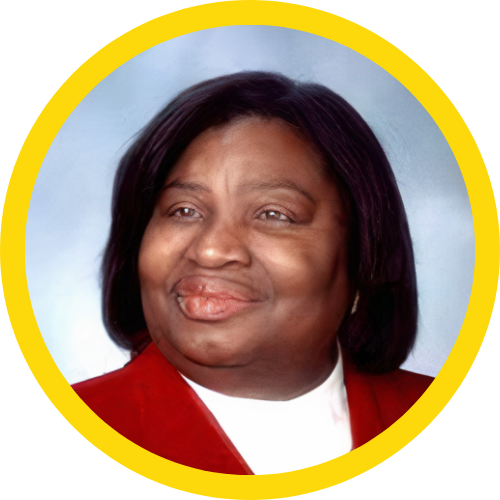
Gloria J. Jeff, AICP is an experienced transportation executive, professional and urban planner. She is co - chair of the TRB Committee on Transportation Equity. She is currently serving as MnDOT Metro District’s Livability Director. She previously served as the Project Director – Rethinking I – 94. She has also served as: Acting Administrator, Deputy Administrator, and Associate Administrator for Policy - Federal Highway Administration; Department Director, Deputy Director for Planning and Division Administrator - Michigan Department of Transportation; General Manager Los Angeles Department of Transportation; and Vice President, District Transportation Planning Manager – Parsons Brinkerhoff. Gloria has represented and lead United States Government delegations in international settings, on transportation issues in the Asian Pacific region and the Permanent International Association of Road Congresses. Ms. Jeff holds a BSE and MSE in Civil Engineering and a Master of Urban Planning from the University of Michigan. She also has an honorary doctorate from Bennett College. She is a member of the American Institute of Certified Planners, American Planning Association, and the Conference of Minority Transportation Officials. Ms. Jeff is co-chair of the TRB Committee on Transportation and Equity. She is an active member of the Transportation Research Board committees on Transportation History, Public Involvement, Community Impacts, and Gender Transportation Issues.

Clinton leads Esri’s efforts to help users apply GIS as a framework for Racial Equity & Social Justice and leads the NorthStar of GIS, a community organization advancing racial justice, equity, and belonging for Black people in GIS.

Ibipo Johnston-Anumonwo is Professor of Geography at State University of New York at Cortland, and a 2018-19 Carnegie African Diaspora Fellow. She is a recipient of the SUNY Chancellor’s Award for Excellence in Scholarship, and the American Association of Geographers Distinguished Teaching Honors. She has been part of the AP Human Geography leadership team and serves on the editorial boards of African Geographical Review, Journal of Geography, The Geography Teacher and WAGADU: Journal of Transnational Women's and Gender Studies. She has authored numerous refereed journal articles and book chapters, co-edited four books on issues of social justice and African studies and is co-editor of Global Perspectives on Gender and Space (Routledge). Ibipo earned her bachelor's degree in Education from the University of Ibadan in Nigeria, master's degree from the Harvard Graduate School of Education, and PhD in Geography from Clark University. Apart from her extensively cited research on employment accessibility constraints for women of color in US cities, her chapter on Gender and Development in the widely read Geography of Africa textbook is one of her most influential contributions.

Maurice A. Jones was appointed CEO of OneTen in March of 2021. OneTen is a coalition of leading chief executives and their companies who are coming together to upskill, hire and promote one million Black Americans over the next 10 years who do not yet have a four-year degree into family-sustaining jobs with opportunities for advancement. Prior to joining OneTen, Maurice was the President of the Local Initiatives Support Corporation (LISC), one of the country's largest organizations supporting projects to revitalize communities and catalyze economic opportunity for residents.
During his time at LISC, Maurice led the company’s effort to expand its footprint into the southern part of the country. He grew the company’s annual investment from a billion dollars to over two billion dollars. He also increased the economic development investments of LISC throughout the country, including launching a subsidiary company dedicated to small business lending. During his tenure, LISC diversified its partnerships with multiple industries, including healthcare, technology, sports, retail and advanced manufacturing.
He previously served as Secretary of Commerce and Trade for the Commonwealth of Virginia where his primary job was to utilize Virginia’s assets to solidify its position as the preeminent place to live, work and conduct business.
Maurice also served as Deputy Secretary for the U.S. Department of Housing and Urban Development (HUD) from April 2012 through January 2014. As the second most senior official at HUD, Maurice managed the Department's day-to-day operations, the annual operating budget of $40 billion and the agency's 8,900 employees.
Before his appointment at HUD, Maurice was President of Pilot Media, the largest print and digital organization in Hampton Roads, Virginia. He joined Landmark Media Enterprises, owner of Pilot Media, in 2005, serving as Vice President of the Landmark Publishing Group. In 2006, he became the Vice President and General Manager of Pilot Media, and in 2008 he became President and Publisher of The Virginian-Pilot.
Maurice was also the Commissioner of the Virginia Department of Social Services and Deputy Chief of Staff to then-Virginia Governor Mark R. Warner. Other positions include: Special Assistant to the General Counsel at the U.S. Treasury Department, Legal Counsel to the Community Development Financial Institutions (CDFI) Fund and Director of the Fund during the Clinton Administration, Associate Attorney at Hunton & Williams in Richmond, Virginia, and Partner at Venture Philanthropy Partners.
Maurice received a Bachelor of Arts in Political Science from Hampden-Sydney College and attended Oxford University in England on a Rhodes Scholarship, where he received a Master of Philosophy in International Relations. He later received a Juris Doctor from the University of Virginia

Demetrice “Dee” Jordan is a Dean’s Postdoctoral Research Fellow in the Department of Global Health and Social Medicine at Harvard Medical School. She has a dual-doctorate in Geography and Environmental Science and Policy from Michigan State University. Dee’s research focuses on the ecological and environmental determinants of disease risk for vector-borne parasitic illnesses, infectious diseases, and Neglected Tropical Diseases of sub-Saharan Africa. Dee is a recipient of an NIH Loan Repayment Program (LRP) award for health disparities research from the National Institute of Allergy and Infectious Disease. She is a diversity, equity, and inclusion (DEI) consultant and has developed innovative programs and curricula to promote the principles of DEI in academic and non-profit settings. Dee is the Founder of the Advancing Geography Through Diversity Program (AGTDP) at Michigan State University, which seeks to address the underrepresentation of African American, Latinx American, and Native American in US geography doctoral programs. She developed the Celebrating Black Geographers anthology hosted online by the American Geographical Society.

Gavin Bridge is Professor of Economic Geography at Durham University and a Fellow of the Durham Energy Institute. His research addresses questions of property, access, and control associated with emergent geographies of resource production and consumption, including the political ecologies of resource scarcity and security. Recent work includes research on raw material production networks associated with old and new carbon economies; and a continuing interest in how the materiality of resources shapes their appropriation and capitalisation. He is the author of Oil (Polity, 2017) with P. Le Billon; co-editor of the Routledge Handbook of Political Ecology (2015) with T. Perreault and J. McCarthy; and co-author of Energy and Society: A Critical Perspective (Routledge, 2018) with S. Barr, S. Bouzarovski, M. Bradshaw, E. Brown, H. Bulkeley, and G. Walker.

Nick Kelly is a researcher and advocate working on public policy and housing policy, with a particular focus on fair housing and urban politics. In his research, he develops and evaluates new policy tools to address racial inequality in housing.
Nick received my PhD in Public Policy and Urban Planning from the Department of Urban Studies and Planning at MIT. He currently serves as a Senior Fellow at the Boston Housing Authority as well as a consultant and advocate on housing issues in Greater Boston and around the country.
Prior to MIT, Nick studied at Princeton’s School of Public and International Affairs where he received a Master in Public Affairs. He also worked at the New York City Economic Development Corporation, as an aide for Senators Charles Schumer and Elizabeth Warren, and at the National Economic Council at the White House.

Erin Kenney is a senior associate at Mass Economics and data-Fab. Erin is experienced in data analysis and methods using statistical software and conducting analyses at geographic scales ranging from individual neighborhoods to thousands of counties nationwide. Recent work includes the development of new economic data and suppression-resolving estimation methods, which underpin core data-Fab product offerings and support Mass Economics’ myriad consulting work. She is also leading the creation of a nationwide county-level database with over 3,000 variables to create an economic typology of U.S. counties and assess the drivers of health outcomes. At Mass Economics, Erin has contributed to the development of industry-cluster strategies for economic development plans in St. Louis and Memphis, supported the development of a report on the role of corporate anchors in community and economic development, modeled the jobs impact of green stormwater infrastructure policies in Detroit, and assisted in the development of an economic and fiscal impact model for a proposed greenway in St. Louis. Previously, Erin worked as a policy analyst at the Chicago Metropolitan Agency for Planning. She holds a master’s degree in city planning and bachelor’s degree in math from MIT.
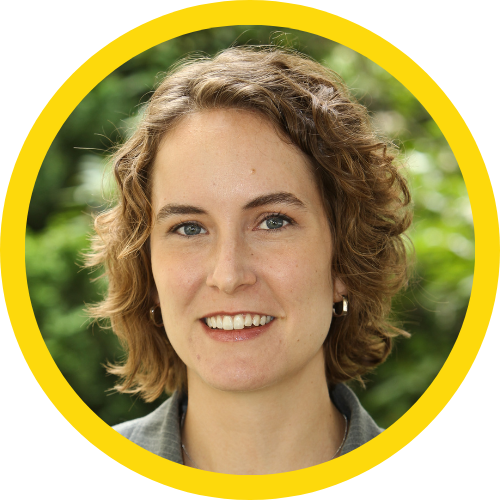
Elizabeth Kneebone is the Research Director for the Terner Center for Housing Innovation at UC Berkeley. In that role, she provides strategic leadership in designing, managing, and implementing the Center’s research portfolio and agenda. Elizabeth’s research expertise includes the geography of poverty in the United States, and how the built environment, housing, and land use policies shape access to economic opportunity.
Before joining the Center, Elizabeth was a Fellow at the Brookings Institution’s Metropolitan Policy Program, where she led the program’s work on urban and suburban poverty and co-authored the book Confronting Suburban Poverty in America. She remains affiliated with Brookings as a Non-Resident Senior Fellow.


Chrystal Kornegay currently serves as Executive Director of MassHousing which lends over $1 billion annually to produce and preserve affordable rental housing and create homeownership opportunities for low- and moderate-income borrowers. Under Chrystal’s leadership, MassHousing launched a highly successful Down Payment Assistance program; secured over $80 million to expand its Workforce Housing initiative; and developed a nationally recognized program for homeownership production in communities of color.
Before joining MassHousing, Chrystal served as the Baker-Polito Administration’s Undersecretary for Housing and Community Development where she successfully advocated to increase state capital dollars for affordable housing by almost 18%; partnered to increase rental subsidies for low income families by 42%; and collaborated to dramatically reduce the number of homeless families in motels.
Prior to her work as Undersecretary, Chrystal was President and Chief Executive Officer at Urban Edge, one of New England’s largest community development corporations. She is credited with leading the organization’s financial transformation, resulting in a $3 million increase in the Agency’s net asset position.
Chrystal serves on the boards of the Massachusetts Department of Transportation and the Massachusetts Bay Transit Authority, the National Housing Trust, the National Council of State Housing Agencies (NCSHA) and is a member of the Federal Home Loan Bank of Boston’s Advisory Committee. Chrystal holds a Master’s in City Planning from the Massachusetts Institute of Technology and a B.A. from Hunter College.

Megan leads Headwaters Economics' research in demographic change, public lands, economic development, and outdoor recreation. She is an economist, and uses economic and demographic analysis to better understand the issues communities face. She holds a Ph.D. and Master’s degree in Economics from the University of Colorado and a Bachelor’s degree in Biology from Williams College.

Robin Leichenko is Professor of Geography at Rutgers University and co-Director of the Rutgers Climate Institute. Her current research explores the economic and equity impacts of climate change in New York and New Jersey. Leichenko was co-chair of the Community Equity Working Group of the Third New York City Panel on Climate Change (NPCC), and she is currently serving as co-chair of the Fourth NPCC. Leichenko has authored or co-authored three books and more than 70 peer-reviewed journal articles and book chapters. Her book, Environmental Change and Globalization: Double Exposures, co-authored with Karen O'Brien (2008, Oxford University Press), won the Meridian Book Award for Outstanding Scholarly Contribution from the American Association of Geographers. Her latest book is titled Climate and Society: Transforming the Future (Polity Press, 2019) and is also co-authored with Karen O'Brien.

John Lettieri is Co-Founder, President and CEO of the Economic Innovation Group (EIG), a bipartisan research and public policy organization whose mission is to advance solutions that empower entrepreneurs and investors to forge a more dynamic American economy. John's career in public policy has included time in both the public and private sectors working with a diverse set of policymakers, entrepreneurs, investors, and global business leaders. Prior to EIG, John was the Vice President of Public Policy and Government Affairs for a leading business association, the Organization for International Investment (OFII), where he led the organization's state and federal policy work on such issues as tax reform, trade, investment promotion, and manufacturing. Before joining OFII, John was Director of Public and Government Affairs for a global aerospace manufacturer. He previously served as a foreign policy aide to former U.S. Senator Chuck Hagel, who was then a senior member of the United States Senate Foreign Relations Committee. John is a graduate of Wake Forest University where he studied political science and global commerce.

Paul Lorah is a Geographer at the University of Saint Thomas where he is the director of the Geography and Environmental Studies programs. He grew up in Western Colorado and currently lives in Saint Paul Minnesota.

Daphne Lundi is Deputy Director for Social Resiliency at the NYC Mayor’s Office of Resiliency. Her work is focused on creating programs that strengthen and prepare NYC communities against climate change impacts. Projects include supporting education programs to increase awareness of heat-waves and heat risk in vulnerable communities, expanding green infrastructure investments that mitigate urban heat island effect, and identifying building retrofitting strategies. Prior to that she was an urban planner at the NYC Department of City Planning working on resilient land use and zoning policy for Brooklyn coastal communities impacted by Hurricane Sandy and managed projects undergoing ULURP in southern Brooklyn and downtown Brooklyn.

Robert Manduca is an Assistant Professor of Sociology at the University of Michigan. his research focuses on economic inequality and on urban and regional economic development. Before becoming a sociologist he was trained as an urban planner.

Trained as an architect, construction engineer, and historian of technology, Dr. Martín connects the bricks and mortar of housing to social and economic outcomes of occupants, especially at the intersections of environmental and construction quality in housing with racial equity and income disparity. Currently, Dr. Martín is a David M. Rubenstein Fellow at the Brookings Metropolitan Policy Program and is the Director of the Remodeling Futures Program at Harvard University’s Joint Center for Housing Studies. Dr. Martín previously led the Urban Institute’s Built Environment practice area, leading all research on energy efficiency, climate adaptation, environmental governance, the housing industry, and construction regulations. Before Urban, Dr. Martín was assistant staff vice president for construction codes and standards at the National Association of Home Builders, SRP professor for energy and the environment at Arizona State University, and coordinator for the US Department of Housing and Urban Development's Partnership for Advancing Technology in Housing. Carlos received his BSAD in architecture from the Massachusetts Institute of Technology and his MEng and PhD degrees in civil and environmental engineering from Stanford University.

Michael Meit serves as Director of Research and Programs for the East Tennessee State University Center for Rural Health Research, and as Deputy Director for ETSU’s HRSA-funded Rural Health Research Center, the ETSU/NORC Rural Health Equity Research Center. Michael currently leads studies focused on the evaluation of rural health programs, health equity, opioid misuse, and food insecurity, among others. He helped to develop the Appalachian Regional Commission’s Opioid Mapping Tool, and the USDA’s national-level Opioid Misuse Community Assessment Tool, which includes a Prosperity Index measuring county-level prosperity indicators. He is a member of the editorial and advisory boards for the Journal of Public Health Management and Practice, the Journal of Appalachian Health, and Public Health Reports, the official journal of the U.S. Surgeon General.

Ndapile Mkuwu is an instructor at the African Drone and Data Academy, and also serves as a YouthMappers regional ambassador under the Everywhere She Maps initiative. Her recent projects have involved integrating drone and open data technology to solve some of the challenges that her community faces.

Maliha Binte Mohiuddin is a Bangladeshi Ph.D. Geography student at West Virginia University. Her passion for the nexus of geospatial technologies and women empowerment have been enriched by receiving her undergraduate and master studies in Disaster Management and her work experience as an Everywhere She Maps Regional Ambassador.
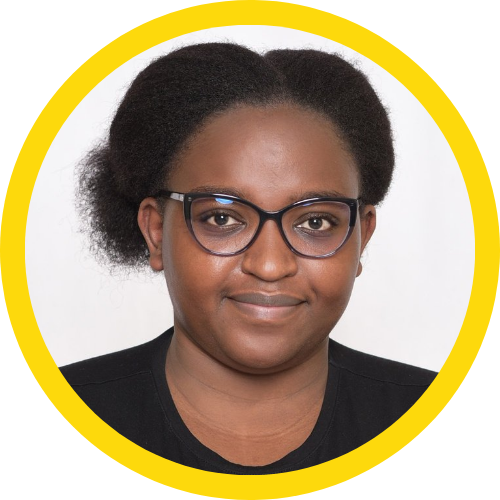
Laura is a Geospatial engineer working in the intersection of open technology, open data, and development. She currently works with a social enterprise in Kenya to support teams in using data for good. Additionally, Laura is a YouthMappers regional ambassador where she supports chapters in East and Central Africa. In her free time, she volunteers with local open data and FOSS communities.

I am Stellamaris Nakacwa, EverywhereSheMaps Regional Ambassador, a YouthMappers campaign towards increasing women's presence and participation in geosciences and STEM as a whole. I am a Geography graduate student at the West Virginia University contributing to research under the USAID project named the Women’s Global Development and Prosperity Initiative (WGDP-I) with specific focus on promoting an enabling environment to increase women's economic empowerment through the application of geo-technologies such as; application of OpenStreetMap in solving women's significant challenges. I am an active board member of the OpenStreetMap community in Uganda and I have contributed to excellence of numerous projects applying GIS for improvement of livelihood and humanitarian response including COVID-19 Rapid Response. I also hold a bachelor's in Land Surveying and Geomatics from Makerere University and a leadership a YouthMappers Fellowship that I am exploiting in co-creation of spaces for youth empowerment especially fellow young women.

My name is Ellie Nasr-Azadani; I am a Ph.D. candidate (ABD) in the Geography Department. I am a member of the Riparia center and recently joined the Landscape Ecology at Penn State lab (LEAPS). Before coming to Penn State, I earned my bachelor's and masters in environmental engineering.
My Ph.D. research primarily focuses on engaging Landscape Visualization, from hand sketches to complicated Immersive Experiences, for competency-based sustainability education. We have various ways to define competencies, but regarding sustainability, it is a combination of knowledge with skill and attitude, which enables individuals to act and behave concerning the environment. My research will be conducted in the Menominee Forest, Wisconsin, where we use qualitative questionnaires to see how 3D interactive landscape visualization can help with systems learning and systems thinking. Improving competency among stakeholders, we expect to implement better practices on Earth, which eventually leads to better adaptation to future uncertainties.

Founding member of the Openstreetmap Senegal community; I am interested in everything related to collaborative and humanitarian mapping.For my contributions, in recent years, an emphasis has been placed on the mapping of health facilities thanks to the healthsites.io platform where I work closely with Mark Herringer for the creation of tools and a community to share and update health facility data.

Kristin O’Brassill-Kulfan is Assistant Teaching Professor and Coordinator of Public History in the History Department at Rutgers University in New Brunswick, NJ. She holds a PhD in History from the University of Leicester and an MA in Modern History from Queens University Belfast. She researches poverty, labor, mobility, crime and punishment in the early American northeast, and is the author of Vagrants and Vagabonds: Poverty and Mobility in the Early American Republic (New York University Press, 2019). Her next book project explores the evolution of the poverty line through the subsistence activities of people experiencing poverty in early America.
As a practicing public historian, she has previously worked as an archivist and research analyst for the Pennsylvania House of Representatives Archives, and with museums, archives, and libraries in the US and the UK curating exhibits, managing archival collections, and creating inclusive public programming. She is co-chairing the New Jersey Historical Commission’s Advisory Council on the state’s semi-centennial commemoration, and recently received the Commission’s Award of Recognition for Outstanding Service to Public Knowledge and Preservation of the History of New Jersey. She is currently working on a project about historical materialism in public history interpretation and commemorations.

Alison Omens is the Chief Strategy Officer at JUST Capital. She is responsible for setting and implementing strategy to achieve mission impact for the organization. Her work includes overseeing programs, revenue, partnerships, development, and strategic engagement with companies, investors, foundations, and nonprofits. She has orchestrated program collaborations with BlackRock, the Aspen Institute, Harvard Business School, and others.
Alison was most recently Advisor for Private Sector Engagement to U.S. Secretary of Labor Tom Perez, where she managed the inclusive capitalism strategy for the Secretary and with the White House. She was also responsible for engagement on the Department’s future-of-work efforts and its ESG investing guidance. Previously, she was Vice President at Outreach Strategies, an environmental strategic communications firm, and the Director of Media Outreach for the AFL-CIO.
Alison is on the Board of Directors of JobsFirstNYC, which expands opportunities for out-of-work and out-of-school youth and on the Advisory Councils of NextGen Chamber, a business organization for millennial business owners, and LitWorld, which promotes youth literacy through storytelling. She is also the co-founder of Smash Squad, a network for women focused on doing well by doing good. Alison received her masters of public administration from Harvard Kennedy School and B.A. from Scripps College.

Tracey Osborne is Associate Professor and Presidential Chair in the Management of Complex Systems Department at the University of California, Merced. She is also the founding director of the University of California Center for Climate Justice. Tracey’s research focuses on the social and political economic dimensions of climate change mitigation in tropical forests and the role of Indigenous Peoples, the politics of climate finance, global environmental governance, and climate equity and justice. She has worked on these issues globally with extensive field experience in Mexico and the Amazon. She also leads the Climate Alliance Mapping Project, a collaborative effort between academics, environmental non-governmental organizations, and Indigenous organizations working for a socially-just response to climate change through research, maps and digital stories. Tracey is a member of the Global Climate Leadership Council, a body that advises UC President Michael Drake on successful implementation of the UC Carbon Neutrality Initiative’s mission. She received her PhD from the Energy and Resources Group at the University of California, Berkeley.

In her current position of deputy mayor, Sharon Owens oversees city programs and services that address quality of life in our community, including Neighborhood and Business Development and Parks, Recreation, and Youth Programs, as well as the Police and Fire Departments. Owens also serves as chief of staff to the mayor. Owens served as the third CEO of Syracuse Model Neighborhood Facility, Inc. and previously worked for the City of Syracuse as Deputy Commissioner of Neighborhood and Business Development from 2010 to 2013 during the Miner Administration.
She currently serves on the Executive Committee of the Greater Syracuse HOPE Initiative, the Consensus Commission on Local Government Modernization, and the I-81 Community Stakeholder Committee. In 2015 Owens received “The Kathy” Award from the Gifford Foundation, which recognized her commitment to establishing community-impacting advocacy. She is a graduate of Syracuse University and is most proud of her role as wife to Shaun Owens and mother to Simone and Isaac.

Dr. Martin J. Pasqualetti was the honored recipient of the Alexander and Ilse Melamid Gold Medal from the American Geographical Society in 2015 for his international contributions to energy studies. In 2018, he was named Alumnus of the Year by the University of California (Riverside); and in 2019, he was elected Fellow of the American Association of Geographers.
Dr. Pasqualetti holds positions as Professor in the School of Geographical Sciences and Urban Planning, and as a Senior Sustainability Scientist in the Julie Ann Wrigley Global Futures Laboratory, both at ASU. His research, publishing and teaching fall at the intersection of energy and society.
Dr. Pasqualetti has advised several agencies and NGOs, including the U.S. Department of Energy, the National Renewable Energy Laboratory, the U.S. Office of Technical Assessment, the National Academy of Sciences, the Arizona Office of Energy Policy, the Union of Concerned Scientists, and Natural Resources Defense Council.

Dr. Marie Price is a Professor of Geography and International Affairs at the George Washington University in Washington, DC. A Latin American and migration specialist, her studies have explored human migration’s impact on development and social change. She has served on the Council of the American Geographical Society since 1995 and became the society’s president in 2016. She is a non-resident fellow of the Migration Policy Institute, a non-partisan think tank that focuses on immigration issues and she serves on the Board of the Dream Project-VA that supports immigrant youth through scholarships and mentoring. In 2017 she participated in an UN expert group on sustainable cities, human mobility and international migration, and in 2018 she gave the keynote at the UN Commission on Population and Development.
She is co-author of two leading textbooks in world geography: Diversity Amid Globalization: World Regions, Environment and Development, 7th edition (2018, Pearson) and Globalization and Diversity: Geography of a Changing World, 6th edition (2020, Pearson). Her publications also include a co-authored report Migrants’ Inclusion in Cities: Innovative Urban Policies and Practices (2012, United Nations), co-edited book Migrants to the Metropolis: The Rise of Immigrant Gateway Cities (2008, Syracuse University Press) and over 60 refereed articles and book chapters. She maintains a website, Globalization, Urbanization and Migration (GUM) that provides data on immigrants (foreign-born) for over 150 metropolitan areas of 1 million or more people throughout the world. Marie earned her graduate degrees in geography at Syracuse University and her undergraduate degree from the University of California, Berkeley.

Laura Pulido is the Collins Chair of Indigenous, Race, & Ethnic Studies and Geography at the University of Oregon where she studies race, environmental justice, and cultural memory. She has written numerous books, including Environmentalism and Economic Justice: Two Chicano Struggles in the Southwest (University of Arizona, 1996); Black, Brown, Yellow and Left: Radical Activism in Los Angeles (University of California, 2006); A People’s Guide to Los Angeles (with Laura Barraclough and Wendy Cheng) (University of California, 2012). She has received numerous honors from the Association of American Geographers, including the Presidential Achievement Award; Meridian Book Award for Outstanding Scholarly book in Geography; Globe Book Award for Public Understanding of Geography; the Harold Rose Anti-Racism Award; and Ford and Guggenheim fellowships.

Tyler currently serves as HOT’s Executive Director. He joined HOT in April 2015 after 12 years leading diverse, people-focused, technology and data-enabled projects across the public, private, nonprofit, and international humanitarian sectors for organizations such as the American Red Cross, Save the Children, the United Nations Secretariat, and for Fortune 500 firms as a private sector consultant with Deloitte Consulting.
In his role at HOT, Tyler oversees a team of 100 staff deployed globally and works to engage and coordinate the efforts of thousands of HOT disaster mapping volunteers for projects in Africa, Asia, and Latin America and the Caribbean. Prior to joining HOT, Tyler led the American Red Cross Hurricane Sandy (New York) community disaster recovery strategy development and implementation and directed a team of community recovery specialists engaging affected residents and community organizations on the ground.
Before joining the Red Cross, Tyler worked in a number of post-disaster and community development contexts in the U.S. and internationally. He taught in Metropolitan College of New York’s Emergency Management Program, and developed training curriculum in religious and cultural competency in disaster for the U.S. Federal Emergency Management Agency.
Tyler holds a Master of International Affairs degree from Columbia University School of International and Public Affairs and a Bachelor of Science degree in Management/Computer Science from Boston College Wallace E. Carroll School of Management.

Dr. Jaana Remes is an economist and a partner at the McKinsey Global Institute (MGI), McKinsey & Company's business and economics research arm, based in San Francisco. Since 2003, Jaana has led MGI's research on productivity, competitiveness, and growth, as well as health and urban economics. Her most recent research sizes the global economic and social benefits from rethinking health as an investment, not just a cost to manage. Jaana leads MGI’s Urban World research series that includes sizing the impact of smart city solutions on citizens’ quality of life, mapping of economic power of cities, identifying global consumer groups shaping global demand, and mapping of the global company landscape; as well as the patterns of urban growth across the Americas. Her long term research interests include productivity prospects in the digital age, global growth prospects in an era of demographic decline, analyses of how different policies have contributed to industry competitiveness and growth; as well as in-depth assessments of the barriers to competitiveness and growth across a range of economies, including the US, Mexico, Brazil, Canada, UK, Finland, Sweden, and South Korea. She has led MGI's research on energy, with a focus on understanding the microeconomic underpinnings of global energy demand and the opportunity to reduce energy consumption through higher energy productivity. She advises global business and government leaders on related topics and frequently contributes to policy debates through articles and conference presentations. Jaana has a Ph.D. on applied economies from Stanford University and an MSc degree in economics and philosophy from the University of Helsinki, Finland. She is a nonresident senior fellow at the Strategic Foresight Initiative of the Atlantic Council, serves on the Board of directors of Girl Scouts Heart of Central California, and is a Search and Rescue K9 handler at California Rescue Dog Association.

Celeste Reynolds is an AP Human Geography teacher in Mashpee, MA, and she is involved with the TeachOSM Team as well as the American Geographical Society Teacher Advisory Board. Juliana Reynolds is a senior at Mashpee High School who has been leading the path to encourage more high school students to do more mapping to help others.

Kevon Rhiney is a British Commonwealth Fellow and Assistant Professor in the Department of Geography, Rutgers University - New Brunswick. His research is situated at the nexus of critical development studies, human-environment geography and political ecology.

Leah Schwizer provides support to the NASA Earth Science Data Systems GIS Team (EGIST). Leah is a Certified GIS Professional (GISP) with over 15 years of experience supporting GIS data management, coordination, outreach and community engagement in order to increase and improve GIS implementation within organizations.

Fran Seegull is President of the U.S. Impact Investing Alliance. The Alliance works to increase awareness of impact investing in the U.S., foster deployment of impact capital across asset classes globally, and partner with stakeholders, including government, to build the impact investing ecosystem. She also serves as Executive Director of the Tipping Point Fund on Impact Investing—a donor collaborative focused on growing the field.
Seegull was the Chief Investment Officer and Managing Director at ImpactAssets where she headed investment management for The Giving Fund—a $1.5B impact investing donor advised fund.
Prior to joining ImpactAssets, Seegull was Managing Director at Funk Ventures, an impact venture capital firm. She also served as VP of Business Development at Novica, an online retailer representing artisans in Asia, Africa and Latin America.
Seegull has a BS in Economics from Barnard College and an MBA from Harvard Business School. She serves on the Investment Committee of Align Impact and the Advisory Boards of SOCAP and the CASE i3 Initiative at Duke University. She tweets at @franseegull.

Liz Ševčenko is founding director of the Humanities Action Lab, a growing consortium of over 30 universities issue organizations and public spaces, led from Rutgers University-Newark, that collaborate to develop student- and community-curated public memory projects around contested social issues. HAL’s latest project is Climates of Inequality: Stories of Environmental Justice, a traveling exhibit, web platform, and public actions confronting histories of environmental racism and their legacies for the climate crisis, created by over 500 students and frontline community leaders across the hemisphere Previous projects included States of Incarceration: A National Dialogue of Local Histories, which inspired the Rikers Public Memory Project, a collaboration with Just Leadership USA and Create Forward, and the Guantánamo Public Memory Project, an international collaboration of universities and organizations Ševčenko launched from Columbia University’s Institute for the Study of Human Rights. Ševčenko was founding director of the International Coalition of Sites of Conscience, a network of historic sites that foster public dialogue on pressing contemporary issues, and served as Vice President for Programs at the Lower East Side Tenement Museum. She received her BA in history from Yale University and her MA in history from New York University. In 2017 she was awarded the Rome Prize to start her forthcoming book, Public Memory for the Post-Truth Era.

Congresswoman Terri Sewell is the first Black woman elected to Congress from Alabama, serving in her sixth term representing the 7th district. Congresswoman Sewell sits on the House Ways and Means Committee, the Steering and Policy Committee, and serves as Chief Deputy Whip. She is a member of the Congressional Black Caucus and the New Democrat Coalition; Co-Chair of the Voting Rights Caucus; Vice-Chair of the HBCU Caucus; and Co-Chair of the Rural Caucus. Sewell is a fierce advocate for job creation and economic opportunity. Representing Alabama’s Civil Rights District, she is a champion for advancing the legacy of the Foot Soldiers who marched for justice. She is the chief sponsor of the John R. Lewis Voting Rights Advancement Act which passed the House in August. Sewell was the first Black woman partner in the Birmingham office of Maynard, Cooper & Gale, and one of Alabama’s only Black public finance lawyers. She was the first Black valedictorian of Selma High School and a graduate of Princeton University, Oxford University, and Harvard Law School. A life member of Alpha Kappa Alpha Sorority, she is the daughter of the late Coach Andrew Sewell and Nancy Gardner Sewell, Selma’s first Black City Councilwoman.

Vice Admiral Robert Sharp is the seventh Director of the National Geospatial-Intelligence Agency. VADM Sharp leads and directs NGA under the authorities of the Secretary of Defense and Director of National Intelligence. He became NGA’s director on Feb. 7, 2019.
From April 2016 to February 2019, VADM Sharp served as Commander, Office of Naval Intelligence and Director, National Maritime Intelligence-Integration Office. During his initial flag assignment he served as the Director for Intelligence (J2), U.S. Special Operations Command.
His previous operational tours include deployments with USS Ranger (CV61), Carrier Air Wing 2 embarked on USS Constellation (CV 64), and Carrier Group 2 embarked on USS Harry S. Truman (CVN 75). Additionally, he conducted multiple deployments to Afghanistan as J2 of a Special Operations Task Force, leading joint, inter-agency intelligence professionals supporting Operation Enduring Freedom.
VADM Sharp’s shore tours include assistant intelligence officer for Commander Naval Air Forces, Pacific; instructor duty at the Fleet Intelligence Center, Pacific; targeting officer on the Joint Staff; Intelligence Operations officer with U.S. Fleet Forces Command; Director of Intelligence for Naval Special Warfare Development Group; Director of Intelligence and Deputy Director for the Maritime Operations Center for Commander U.S. Naval Forces Central Command, U.S. 5th Fleet; and senior fellow on the Chief of Naval Operations Strategic Studies Group. He commanded the Joint Intelligence Center, U.S. Central Command from August 2010 to August 2012.
A native of San Jose, California, VADM Sharp graduated from the University of the Pacific with a Bachelor of Arts in English and was commissioned through Officer Candidate School in 1988. He holds a Naval War College diploma and earned a Master of Science in National Resource Strategy from the Industrial College of the Armed Forces in 2008.
In addition to multiple personal, unit, and campaign awards, he has been the recipient of the Vice Admiral Rufus L. Taylor award for excellence in instruction, the U.S. Army’s Knowlton Award for Military Intelligence, the Rear Adm. Edwin T. Layton leadership award, and the Naval Intelligence Foundation award for excellence in operational intelligence support to the Fleet.

Natalia da Silveira Arruda is an architect and urbanist from Federal University of Rio Grande do Sul (Brazil), has an MSc. in Territorial, Urban, Environmental, and Landscape Planning from Polytechnic of Turin (Italy), and current is a Ph.D. Student in Urban Planning at Arizona State University (United States). She worked as a Professor at Universidad de Antioquia (Colombia) from 2016 to 2021, where helped found the YouthMappers’ chapter GeoLab. Natalia is a YouthMappers Regional Ambassador Everywhere She Maps. Her interests include urban planning, sustainable mobility, collaborative and humanitarian mapping.

Matthew J. Slaughter is the Paul Danos Dean of the Tuck School of Business at Dartmouth, where in addition he is the Earl C. Daum 1924 Professor of International Business. He is also a member of the American Academy of Arts and Sciences, a life member of the Council on Foreign Relations, a research associate at the National Bureau of Economic Research, a member of the Aspen Institute’s Economic Strategy Group, and an academic advisor to the McKinsey Global Institute.

Kristin Smith is a researcher at Headwaters Economics - an independent, nonprofit research group based in Montana. She leads the team's research and community engagement related to flood mitigation and contributes to research on public finance and fiscal policy. Kris holds a Bachelor’s degree from Middlebury College, a Master’s degree in Community Development & Applied Economics from the University of Vermont, and has a Ph.D. in Earth Sciences – Geography from Montana State University.

Dr. Caroline Solomon, Professor of Biology and Director of the School of Science, Technology, Accessibility and Mathematics and Public Health at Gallaudet University, is an aquatic ecologist and a mentor for STEM deaf and hard-of-hearing students. She has obtained 5 federal grants in the past 8 years for efforts to support deaf and hard-of-hearing students in STEM through providing authentic research opportunities and fostering vertical mentoring. Her work has been featured in numerous reviewed papers, conference articles, invited presentations, news releases and a short biography in K-12 science textbooks. Dr. Solomon’s contributions have earned her teaching and education awards from the Association for the Sciences of Limnology and Oceanography, Gallaudet University, National Public Radio (50 great teachers) and several features in prominent education media. In addition, she was invited to speak at the 2017 National March for Science in Washington D.C. Her latest publications include An Often Overlooked Element of Diversity: Disability (2021, ASLO Bulletin) and Meeting Frameworks must be even more inclusive (2021, Nature Ecol Evol). Dr. Solomon obtained her BA in Environmental Science and Public Policy from Harvard University, MS in biological oceanography from the University of Washington, and Ph.D. in biological oceanography from the University of Maryland.

John G. Stehlin is Assistant Professor in the department of Geography, Environment, and Sustainability at the University of North Carolina at Greensboro. His research focuses on urban political economy, mobility and transportation infrastructure, and questions of spatial justice. He is the author of Cyclescapes of the Unequal City: Bicycle Infrastructure and Uneven Development (University of Minnesota Press, 2019) and co-editor of Urban Platforms and the Future City: Transformations in Infrastructure, Governance, Knowledge and Everyday Life (with Mike Hodson, Julia Kasmire, Andrew McMeekin, and Kevin Ward, Routledge, 2020).

Michael Storper (PhD, Economic Geography, University of California, Berkeley) is an economic geographer who currently holds positions at UCLA, the London School of Economics, and formerly at Sciences Po/Paris. His fields of research are: regional economic development; urbanization; the link between innovation and geographical change; and globalization. He is the author of more than 100 peer-reviewed academic articles and ten books, including the widely-cited The Rise and Decline of Urban Economies (Stanford, 2015); Keys to the City (Princeton, 2013), The Regional World: Territory, Technology and Economic Development (Guilford, 1997), Worlds of Production (Harvard, 1997). He received a Doctorate Honoris Causa from the University of Utrecht In 2008, the Sir Peter Hall Prize from the Regional Studies Association in 2012, the Founder’s Gold Medal from the Royal Geographical Society in 2016, and the Distinguished Scholarship Honors from the American Association of Geographers in 2017. He holds dual citizenship of the USA and France.

Paul Sutton is a professor in the Department of Geography and the Environment at the University of Denver. His teaching and research interests are in the area of Ecological Economics, Population Geography, and Sustainability Science.

Dr. Omari H. Swinton is a professor in the Economics department at Howard University where he teaches introductory, intermediate, and urban economics. He is currently the Director of Graduate Studies and Chair. His research interests include labor economics and education. He has papers examining the teenage labor market, the benefits from attending HBCU's, and the returns to a college education. He coauthored a report for NAFEO entitled "The State of Blacks in Higher Education.” He currently is working on projects that examine the returns to effort for students, the obstacles to faculty diversity in higher education, and benefits of attending an HBCU. He is the director of the AEA Summer Training Program and Scholarship Program which has increased diversity in the field of economics by preparing talented undergraduates for doctoral programs in economics and related disciplines. He earned his B.S. from Florida A & M University in 2001, and his doctoral degree from Duke University in 2007. He resides in Upper Marlboro, MD with his wife, Phyllis, and four children, Omari Jr., Nyla, Jamir, and Nasir.

Michelle M. Thompson is an Associate Professor at the University of New Orleans in the Department of Planning & Urban Studies (UNO PLUS). Michelle teaches courses in geographic information systems, community development finance, urban public finance, housing, urban studies and land use planning. She received a Masters’ in Regional Planning'84 and Ph.D.'01 from the Cornell University Department of City and Regional Planning with a focus on community development and spatial analysis using geographic information systems (GIS). Michelle received her Bachelor of Arts in Policy Studies from the Maxwell School of Citizenship and Public Affairs from Syracuse University in 1982. Michelle obtained her Geographic Information Systems Professional certification (GISP) in 2015.
Michelle is also the Principal of Thompson Real Estate Consultants LLC, a real estate research and education firm. Michelle has also worked in both public and private companies related to the finance of residential and commercial real estate. Michelle has a long-term interest in working with community development organizations to provide technical support, market research and evaluation services. Currently Michelle serve as a Mastercard Center for Inclusive Growth Senior Data Fellow to evaluate financial wealth of low-impact communities using anonymized and aggregated transaction data.

Dr. Christopher Tucker manages Yale House Ventures, a portfolio of social ventures and technology companies that span the worlds of energy, geospatial, sensor, cyber-security, open source, and social media technologies, across the domains of defense/intelligence, international affairs, civilian government, commercial industry, NGOs, and academe. He is also the Chairman and CEO of The MapStory Foundation and President of the foreign policy advocacy group, Friends of the Arc.
Dr. Tucker was previously Senior VP for the Americas/National Programs at ERDAS and President/CEO of IONIC, a leader in interoperable web-mapping, location based services, imagery management and distributed geoprocessing. He has served on a variety of Boards such as the US Geospatial Intelligence Foundation, the Open Geospatial Consortium, Open Plans, OpenGeo, the Secretary of Interior’s National Geospatial Advisory Committee, and the Defense Science Board Intelligence Task Force, the DNI’s Intelligence Community Strategic Studies Group, and serves as an Independent Advisor to the Director of the National Geospatial Intelligence Agency (NGA). Dr. Tucker served on the National Academy of Science’s Committee on NGA’s GEOINT Research Priorities.
Dr. Tucker was Chief Strategic Officer of In-Q-Tel, the CIA’s venture capital fund. He was responsible for managing the technical portfolio, issues of organizational design, and relations with the intelligence community, industry and media.
As Special Advisor to the Executive Vice Provost of Columbia University, Dr. Tucker was responsible for a range of issues having to do with strategic institutional development, R&D portfolio management, federal science and technology policy, and the organization of interdisciplinary research. At Columbia, he co-founded the Center for Science, Policy, and Outcomes and has taught courses at the Columbia School of International and Public Affairs. Dr. Tucker earned his B.A., M.A., and Ph.D. at Columbia University in the City of New York.

Kyle Whyte is George Willis Pack Professor of Environment and Sustainability at the University of Michigan, teaching in the environmental justice specialization. His research addresses environmental justice, focusing on moral and political issues concerning climate policy and Indigenous peoples, the ethics of cooperative relationships between Indigenous peoples and science organizations, and problems of Indigenous justice in public and academic discussions of food sovereignty, environmental justice, and the anthropocene. He is an enrolled member of the Citizen Potawatomi Nation. Kyle currently serves on the White House Environmental Justice Advisory Council, the Management Committee of the Michigan Environmental Justice Coalition, and the Board of Directors of the Pesticide Action Network North America. He has served as an author for the U.S. Global Change Research Program, including on the National Climate Assessment, and for the Intergovernmental Panel on Climate Change Working Group II. He is a former member of the Advisory Committee on Climate Change and Natural Resource Science in the U.S. Department of Interior and of two environmental justice work groups convened by past state governors of Michigan.

Elizabeth (Liz) Williams, PhD is the Director of Data and Policy in the Office of Transportation Planning at the Massachusetts Department of Transportation (MassDOT). She is responsible for coordinating projects and data within and between MassDOT offices and partner agencies and ensuring objectives and strategies are consistent. Liz has fifteen years’ experience in the economic and social policy and research field and previously held positions with the MBTA, the UMass Donahue Institute, the Dukakis Center for Urban and Regional Policy, and the American Institutes for Research. Liz is trained as an urban sociologist and has a Bachelor’s degree from Clark University, a Master’s degree from George Washington University, and a PhD from Northeastern University.


Maia Woluchem is a Tech Fellow on the Civic Engagement and Government team at the Ford Foundation, as well as an Adjunct Professor of Public Service at the Wagner School of Public Service at NYU, teaching a course on segregation. At Ford, she works across a range of civil society organizations on examining the intersection of technology and civil society. She received her MCP in Urban Planning from MIT in 2019.
Prior to her graduate work at MIT, Maia was a researcher at the Urban Institute, where she focused on how data and technology could democratize opportunity in support of social change, with a particular emphasis on ensuring community engagement and leadership with respect to how data is used, analyzed, and collected. While at Urban, Maia also helped foster the National Neighborhood Indicators Partnership, a network working to advance the effective and equitable use of data across government, civil society groups, and academia.

Veronica L. Womack serves as the Executive Director of the Rural Studies Institute at Georgia College and Professor of Political Science and Public Administration. She received her BA of Communications, MPA and Ph.D., in Political Science from the University of Alabama.
Her research focuses on rural communities, with a particular focus on the Southern Black Belt region of the American South. She is a noted author and researcher. Funders of her research include USDA, the Robert W. Johnson foundation, and the Southern Economic Advancement Project (SEAP). She is also the founder of the Blackfarmersnetwork.com, a website that highlights the legacy of African American farmers, in the Black Belt region of the South. She has been featured on various media outlets including The New York Times, The Washington Post, NPR, GPB, The Nation, and Georgia Trend for her work in the region.

Professor Danielle Wood serves as an Assistant Professor in Media Arts & Sciences and holds a joint appointment in the Department of Aeronautics & Astronautics at the Massachusetts Institute of Technology. Within the MIT Media Lab, Prof. Wood leads the Space Enabled Research Group which seeks to advance justice in Earth's complex systems using designs enabled by space. Prof. Wood is a scholar of societal development with a background that includes satellite design, earth science applications, systems engineering, and technology policy. In her research, Prof. Wood applies these skills to design innovative systems that harness space technology to address development challenges around the world. Prior to serving as faculty at MIT, Professor Wood held positions at NASA Headquarters, NASA Goddard Space Flight Center, Aerospace Corporation, Johns Hopkins University, and the United Nations Office of Outer Space Affairs. Prof. Wood studied at the Massachusetts Institute of Technology, where she earned a PhD in engineering systems, SM in aeronautics and astronautics, SM in technology policy, and SB in aerospace engineering.

Joseph S. Wood is a geographer whose academic work focuses on the North American cultural landscape. He’s taught at the University of Nebraska at Omaha; George Mason University, where he chaired the Department of Geography and Earth Systems Science and served as Vice Provost for Academic Affairs; and the University of Southern Maine as Provost and Interim President. He served as Provost at the University of Baltimore from 2009 to 2016. Wood’s publications in cultural geography explore a variety of topics from the New England village as invented tradition to contemporary Vietnamese place-making in American suburbs and much more. At UB, Joe teaches about how Americans have shaped their cities, and in 2015 he developed the community forum-based Divided Baltimore course to address how the geography of Baltimore entrenches structural racism. He’s an AGS Travel Program lecturer in Cambodia and Vietnam, across Canada by train, and, most recently, by ship from Newfoundland into the Great Lakes. He holds Geography degrees in all levels of education; a BA from Middlebury College, an MA from the University of Vermont and a Ph.D. from The Pennsylvania State University.

Marcela Zeballos is the Managing Director for YouthMappers, an international network of university-student-led chapters that create and use public geospatial data and technologies to highlight and directly address development challenges worldwide.

Adriana A. Zuniga-Teran currently works at the School of Landscape Architecture and Planning and the Udall Center for Studies in Public Policy, at The University of Arizona. Adriana does research in Social and Environmental Sciences with a focus on arid lands. She works with stakeholders and community partners to answer questions related to water security, urban resilience, and environmental justice, by focusing on greenspace/green infrastructure across the urban-rural continuum.