

Speaker BiosClick the image to go to the Speaker’s Bio


Jamie is the co-Founder of RethinkX, a not-for-profit think tank that analyzes and forecasts technology disruptions and their impact on society, using a complex systems-based framework. He is co-author of the book Rethinking Humanity. He is also the founder of Tellus Mater, a grant-making foundation that supports work on issues related to sustainability, with a focus on the finance system. Jamie is Chairman of a family office based in London and specializes in clean tech venture capital. He has a History degree and a Masters in Sustainability Leadership from Trinity College, Cambridge.

Patrick O. Brown, MD, PhD is an emeritus professor at Stanford University and founder of Impossible Foods, a company whose mission is to replace the use of animals in the global food system. Dr. Brown founded Impossible Foods in 2011, when he recognized that the only way to avert catastrophic climate change and the global collapse of biodiversity was to replace the most destructive technology in human history – animal agriculture. He saw that this goal could be achieved by inventing a new technology platform that would enable the most delicious, nutritious, affordable and sustainable meats in the world to be made directly from plants. Dr. Brown received his BA, MD and PhD at the University of Chicago and completed a residency in pediatrics at Chicago’s Children’s Memorial Hospital. As a post-doctoral fellow with Mike Bishop and Harold Varmus, he defined the mechanism by which HIV and other retroviruses incorporate their genes into the genomes of the cells they infect. He then joined the Biochemistry faculty at Stanford University’s School of Medicine. At Stanford, Pat and colleagues invented the DNA microarray – a new technology that made it possible to monitor the activity of all the genes in a genome – along with the first methods for analyzing, visualizing and interpreting global gene expression programs. This technology opened a window on the genetic programs that specify the characteristics and behaviors of cells and tissues. He and his colleagues then pioneered the use of gene expression patterns to classify cancers and improve prediction of their clinical course. Pat has also been a pioneer in open-access publishing. With Harold Varmus and Michael Eisen, he founded the Public Library of Science, a nonprofit scientific publisher that has transformed the publishing industry by making scientific and medical research results freely available to the public. He is a member of the US National Academy of Sciences and National Academy of Medicine. and recipient of the National Academy of Sciences award in Molecular Biology, American Cancer Society Medal of Honor and the Takeda Award. He has published more than 240 scientific articles.

Amanda Byrd is a geospatial analyst at Dewberry with a passion for supply chain logistics and emergency management. She is a graduate of Penn State’s Geography program. Her experience includes the analysis of existing food supply chain information sharing platforms in the Metropolitan Washington Region. Ms. Byrd also recently supported the response to Hurricane Ian with grocery supply chain resilience analysis via FEMA’s Supply Chain Analysis Network. She is excited to discuss the intersections of food and data sharing, and their role in shaping a more resilient planet.

Dr. Chen is director of the Center for International Earth Science Information Network (CIESIN), a part of the Earth Institute at Columbia University in New York. He also manages the NASA Socioeconomic Data and Applications Center (SEDAC), a unique source of interdisciplinary, open access geospatial data and information focused on human-environment interactions. He recently served on the United Nations Independent Expert Advisory Group on the Data Revolution for Sustainable Development, and helped to develop the innovative immersive exhibit, Connected Worlds, at the New York Hall of Science. He received his PhD in Geography from the University of North Carolina at Chapel Hill and holds Masters degrees in Technology and Policy and in Meteorology and Physical Oceanography from the Massachusetts Institute of Technology. His undergraduate degree was in Earth and Planetary Sciences at MIT.

Dr. Xiang "Peter" Chen is an Assistant Professor in the Department of Geography at the University of Connecticut, USA. He received his bachelor’s degree and master’s degree at Beijing Normal University, China, and earned a Ph.D. in geography at The Ohio State University. His research interests are focused on GIScience and community health. He employs GIS instruments and big data analytics to unveil the socioeconomic and health inequalities across urban communities. His topical area is food access, evaluating if community members have equitable access to healthy, affordable food provisioning. His latest project employs a deep learning model for deriving the nutritional information of restaurant from food images, which portrays the nutrition foodscape in Hartford, CT.

Joe T. Darden is a Professor Emeritus in the Department of Geography, Environment, and Spatial Sciences, Michigan State University (MSU), East Lansing, MI 48824, USA. Email: jtdarden@msu.edu. His research interests include residential segregation and socioeconomic inequality by neighborhood socioeconomic characteristics in Metropolitan areas. Dr. Darden has authored, co-authored/edited eight books. His ninth book, “Detroit After Bankruptcy,” will be published by Policy Press in 2023. He has earned numerous awards and earned international recognition for his work as a geographer. These awards include: the MSU Distinguished Faculty Award (1984); Fulbright Scholar Award, Department of Geography, University of Toronto (1997); and American Association of Geographers (AAG) Lifetime Achievement Award (2019). He was the former Dean of Urban Affairs Programs at MSU from 1984 to 1997.

Glenn Denning joined Columbia University’s School of International and Public Affairs in 2009 as founding Director of the Master of Public Administration in Development Practice (MPA-DP), a joint undertaking of SIPA with Columbia University’s Earth Institute. He teaches core courses on Global Food Systems and Sustainable Development Policy and Practice. Over the past 40 years, Denning has advised governments and international organizations on agriculture and food policy in more than 50 countries. At the global level, he served on the UN Millennium Project Hunger Task Force (2004-6) and the Senior Steering Group of the UN High Level Task Force on the Global Food Security Crisis (2009-13). Denning worked in the Consultative Group on International Agricultural Research for 24 years and held senior management positions at the International Rice Research Institute and the World Agroforestry Centre. In 2000, Denning was honored by the Government of Cambodia as Commander of the Royal Order of Sahametrei for his contributions to increasing national rice production. In 2014, Denning received the Columbia University Presidential Award for Outstanding Teaching. In his forthcoming book—Universal Food Security: How to End Hunger While Protecting the Planet (Columbia University Press)—Denning identifies priorities for achieving a genuinely food-secure world.

Dennis Derryck is the Founder of Corbin Hill Food Project, a social enterprise with a mission of providing food to those who need it most. Its work is grounded in the values of sovereignty, racial equity, and sharing power. Corbin Hill’s impact continues to grow as its innovations are adopted as best practice by organizations like Grow NYC. Its flexible model now serves both low-income communities of color and middle-income communities.Dennis Derryck is a Professor Emeritus at the New School University where he was formerly a Professor of Professional Practice at the New School of International Affairs, Management and Urban Policy for the past 15 years. He views himself as a practitioner generating theory through practice, and his experiences span the nonprofit, public, and private sectors. He is the former Chair of WE ACT for Environmental Justice. Dennis earned his BS from Manhattan College in Mathematics and his MS and PhD from Fordham University in Education Administration and Supervision.

Mariah Ehmke is a research agricultural economist at the United States Department of Agriculture’s Economic Research Service (USDA-ERS). Her research program focuses on the economics of obesity. Her current work focuses on obesity-related health disparities, nutrition security in America, and household economic decisions. She is currently serving on the federal government’s interagency committee to develop the 2025 United States dietary guidelines. Her past work includes peer-reviewed research on cultural differences in economic behavior, agricultural and environmental management decisions, food policy, and nutrition information use. She has been recognized by the American Agricultural and Applied Economics Association with the President’s award for service to the profession. She taught university courses on consumer economics, entrepreneurship, agribusiness marketing, international trade, and world food policy at the University of Wyoming prior to joining USDA-ERS. Ehmke completed her doctorate at Purdue University. There she was a USDA Needs Fellow and AAUW American Fellow. She also holds a M.Sc. in Agricultural Economics from The Ohio State University and B.Sc. of Human Ecology from Kansas State University. She was a New Zealand Home Science Association Scholar to the University of Otago.

My name is Amin M. Elamin, and I am a second-year Ph.D. student at the University of Maryland, College Park, Department of Geographical Sciences. My research interests exist at the interface of human-environmental interactions, sustainable development, and natural resource management/governance, with particular interest in the food-energy-water (FEW) nexus. Through my work, I hope to develop new understandings, models, and solutions related to climate resilience and adaptation by leveraging mixed-methods research. I am originally from Sudan, and in my free time, I enjoy urban photography, binge-watching documentaries, and community service work. My advisor is Dr. Meredith L. Gore.

Maria Fadiman is a professor in the department of Geosciences at Florida Atlantic University, 2006 National Geographic Emerging Explorer, two times TEDx speaker and a fellow in the Explorers Club. She researches the human/environmental aspect of conservation, focusing on ethnobotany (the relationship between people and plants), working primarily in rural areas throughout the globe. In addition to her scholarly publications, she is one of the invited contributors to the book, Global Chorus along with Jane Goodall and the Dalai Lama, among others, National Geographic’s Survival Manual, the book No More Endlings and in the Voices section of the American Way Magazine. She was featured on Into the Wild and on the National Geographic International Channel for Earth Day. She has her quote printed on a Starbuck’s cup, and was selected to be one of Vassar College’s “Famous Alumni.” She has been a mentor with National Geographic, an expert on their Travel Expeditions, been featured in science and language textbooks, and was chosen as a “Scientific Hero” at Good Shepherd School. She enjoys science communication and has presented throughout the United States and across the globe at universities and public venues.

Dr. Michael Ferrari is the Chief Scientific Officer and Chief Commercial Officer for Climate Alpha. Michael built and led data science teams at several global organizations including Engine No.1, Syngenta, Point72 Asset Management, IBM, Mars, and the Coca-Cola Company, as well as with several startups in the technology, fintech, and commodity sectors. Most of his work sits at the agriculture-water-energy-infrastructure nexus. Michael has spent two decades as a scientist, engineer, and economist in a wide variety of sectors with direct applications for the Climate Alpha engagement strategy. He has been an affiliate scientist at the National Center for Atmospheric Research and the MIT Media Lab, and he is also a senior fellow at the Wharton School.

Abigail Fitzgibbon is a product engineer at Esri, a world leader in geospatial information software. On the ArcGIS Living Atlas environment team, her work focuses on climate change risk and agriculture. She is also a recent graduate of UCLA with research interests in climate, food security, and conflict.

Laura Geller is the Agricultural Attaché covering Ukraine and Moldova for the U.S. Embassy in Ukraine. She evacuated from Kyiv shortly before Russia invaded and is now in DC but continues to work with her team in Kyiv daily. Prior to her posting to Ukraine, Ms. Geller was the Senior Agricultural Attaché based in Pretoria, South Africa, covering 11 countries in the region. She also served as the Agricultural Attaché in Brasilia, Brazil from 2013 to 2017. Ms. Geller holds a master’s degree in International Development from the University of Pittsburgh and a bachelor’s in Political Science from Ohio University and is a Returned Peace Corps Volunteer (Russia 2001-2002). Ms. Geller has been with FAS since 2007.

Dr. Phoebe Godfrey is a Full Professor-in-Residence in Sociology at UCONN and her focus is on the intersections of identity, society and natural world. She teaches courses on Society and Climate Change, Sustainable Societies, Social Theory, Sociology of Food, Sociology of Education and many others but in all, her focus is on engaging students in order to help them explore their potentials. She the co-editor of a two-volume reader – Systemic Crises of Global Climate Change: Intersections of Race, Class and Gender and Emergent Possibilities for Global Sustainability Intersections of Race, Class and Gender, Routledge 2016. More recently, she is also the co-editor of Global [Im]-Possibilities: Exploring The Paradoxes of Just Sustainabilities, Bloomsbury Press, 2021 and author of Understanding Just Sustianabilities: A Case Study of a Share-Use Kitchen in Connecticut, Routledge, 2021. She is the co-founder (with her wife Tina Shirshac) of the non-profit CLiCK (Commercially Licensed Co-operative Kitchen) in Windham that is an incubator for local food businesses. She considers her teaching and non-profit work as central to her commitment to social and ecological justice.

Meredith L. Gore is an Associate Professor of Human Dimensions of Global Environmental Change in the Department of Geographical Sciences at University of Maryland, College Park. Her research uses risk concepts to build new understanding of human-environment relationships and is designed to build scientific evidence for action. The majority of her activities can be described as convergence research on conservation issues such as wildlife trafficking, illegal logging, fishing and mining. Meredith has conducted research in collaboration with local communities in 15 countries on 5 continents with funding from the National Science Foundation, U.S. Fish & Wildlife Service, Michigan Department of Natural Resources, DEFRA, Global Wildlife Conservation and others. Her website hosts voluntary, consensus-based and open-access GIS standards to combat wildlife trafficking. In 2016-2017, she served in-residence at the U.S. Department of State Office of the Geographer and Global Issues as a National Academies of Sciences Jefferson Science Fellow. Meredith has continued to provide senior science advising to the State Department on conservation crime as an Intelligence Research Expert; she has advised the United Nations Office on Drugs and Crime’s Office of Wildlife and Forest Crime, the African Union Commissions’ Department of Rural Economy and Agriculture, Wildlife Conservation Society’s Urban Bushmeat Team, and Michigan Department of Natural Resources’ Wildlife Division. Dr. Gore has published over 75 referred journal articles and book chapters and currently serves as an Associate Editor for Global Ecology and Conservation. She is the Editor and author of Conservation Criminology (2017, WileyBlackwell), and her co-edited volume Women and Wildlife Trafficking (WileyBlackwell) is expected in early 2022. Meredith earned her PhD at Cornell University, MA at The George Washington University, and BA at Brandeis University.

I am a geographer interested on landscape change. In particular, I do research on how agricultural production systems transform landscapes, and how telecouplings for commodities such as coffee have shaped local land-use systems. I am also interested on climate change and biodiversity loss processes worldwide. I have been involved in global environmental assessments (Millennium Ecosystem Assessment, IPBES, Global Environment Outlook) as a fellow, author and reviewer. I am a professor at Universidad de los Andes, in Bogota, Colombia.

National Geographic Explorer Victoria Herrmann works with communities across the world on adapting cultural heritage to climate change impacts. Victoria is an Assistant Research Professor at Georgetown University and a Senior Fellow at The Arctic Institute, a nonprofit with a mission to inform policy for a just, sustainable, and secure Arctic. For six years, Victoria served as the Managing Director of The Arctic Institute, where she directed strategic planning and oversaw the implementation of global research partnerships by a 45-person team. As a recognized expert in the field, Victoria has testified before the House and Senate, served as the Alaska Review Editor for the National Climate Assessment, and contributed to national and international media. At Georgetown, she serves as the Principal Investigator of a National Science Foundation-funded Research Coordination Network on Arctic migrations. The three-year initiative aims to build a lasting, policy-oriented network of Arctic scientists to strengthen communication between nations and scientific disciplines. Victoria recently completed a year-long White House Fellowship and was a Junior Fellow at the Carnegie Endowment for International Peace, a Fulbright Awardee to Canada, and a Mirzayan Science and Technology Policy Graduate Fellow at the National Academies of Sciences. She received her Ph.D. from the University of Cambridge as a Gates Scholar.

Rini Indrayanti is currently the National Platform Manager of Indonesia's UNDP Sustainable Palm Oil Initiative (SPOI) project. Rini has over 20 years of experience in various development programs focusing on sustainable agriculture, post-conflict, and post-disaster recovery. Her expertise is multi-stakeholders dialogue and collaboration to create joint actions to tackle agricultural sustainable development issues in Indonesia. She has a bachelor’s degree in management from Hasanuddin University and a Master’s in Development Practice (Adv.) from the University of Queensland, Australia.

Dr. Molly Jahn joined DARPA as a program manager in the Defense Sciences Office in January 2021 on an Intergovernmental Personnel Act (IPA) assignment from the University of Wisconsin-Madison. Her current research interests focus on leveraging advances in biochemistry and complexity to improving resiliency in critical U.S. infrastructure and supply chains.
Jahn previously led research groups at Cornell University and UW-Madison where she also served as dean of the College of Agricultural and Life Sciences, leading a successful bid for a Department of Energy Bioenergy Research Center. She has served as deputy and acting Under Secretary of Research, Education and Economics at the Department of Agriculture.
In the past five years, Jahn held guest appointments at the Naval War College in the Ethics of Emerging Technologies program, Los Alamos National Laboratory, and Oak Ridge National Laboratory where she chaired the scientific advisory board for the Energy and Environmental Sciences Directorate in addition to serving on the laboratory director’s advisory committee. She also led a cooperative research and development agreement with the National Geospatial Intelligence Agency, and was contracted by NASA headquarters’ Earth Sciences Directorate to build bridges to the Department of Defense and Intelligence Community.
Jahn received her doctorate in plant genetics from Cornell University and honorary doctorates from Swarthmore College and Anglia Ruskin University. She also holds a Master of Science in biology from the Massachusetts Institute of Technology and a Bachelor of Arts with distinction from Swarthmore College.

Demetrice “Dee” Jordan is a Dean’s Postdoctoral Research Fellow in the Department of Global Health and Social Medicine at Harvard Medical School. She has a dual-doctorate in Geography and Environmental Science and Policy from Michigan State University, becoming the first student in the department to receive a dual-PhD. Dee’s research focuses on the ecological and environmental determinants of disease risk for vector-borne parasitic illnesses, infectious diseases, and Neglected Tropical Diseases of sub-Saharan Africa. She is a diversity, equity, and inclusion (DEI) consultant and has developed innovative programs and curricula to promote the principles of DEI in academic and non-profit settings. Dee is the Founder of the Advancing Geography Through Diversity Program (AGTDP) at Michigan State University, which seeks to address the underrepresentation of African American, Latinx American, and Native American graduate students in the discipline of Geography. She recently developed the Celebrating Black Geographers anthology hosted online by the American Geographical Society. Dee is a proud member of the National Council of Negro Women and Alpha Kappa Alpha Sorority, Incorporated.

Dr. Moses Kansanga is an Assistant Professor of Geography and International Affairs at the George Washington University. His research explores questions at the intersection of sustainable agriculture and natural resource management using community-based and participatory approaches. In the past decade, Dr. Kansanga’s research has focused on integrating traditional knowledge systems and modern science to generate contextually appropriate solutions to complex socioecological issues such as food insecurity and climate change.

Brian co-founded the Reducetarian Foundation in 2015 after coining the term “reducetarian” to describe a person who is deliberately reducing their consumption of meat. He is now the author of The Reducetarian Solution, The Reducetarian Cookbook, and Meat Me Halfway, and is the lead producer of the documentary version of Meat Me Halfway. He is a regular contributor to Fast Company, Entrepreneur, and Forbes, and his writings have appeared in The Atlantic, The Los Angeles Times, and The Washington Post, among others.

Dr. Pamela Koch is the Mary Swartz Rose Associate Professor of Nutrition and Education and the faculty director of the Laurie M. Tisch Center for Food, Education & Policy in the Program in Nutrition at Teachers College, Columbia University. Pam conducts research with schools and communities to give people power to demand healthy, just, sustainable food. She translates her research into curricula for school teachers, recommendations for policy makers, and resources for advocates. She has evaluated many school-based programs that improve school meals, create school gardens, conduct cooking sessions, and promote food justice. She teaches courses on sustainability of the food system, social and psychological determinants of food choice, and the process of food and nutrition education, all done through a sustainability and equity lens. She also teaches an online professional development course for educators, Teaching Food and Nutrition for All. Her work contributes to increased access to nutritious, delicious and sustainable food for all. She completed her BS and MS from Rutgers University and her EdD and RD from Teachers College, Columbia University.

Great-Great Grandfather John David Nightengale lived in Ostroh, Russia. He was the village doctor. His son, Great-Grandfather Abraham Nightengale at 18 years old, immigrated to America in 1909. He came to Kansas and eventually purchased 160 acres in Haskell County to farm. Today, I'm the 4th generation farmer in Western Kansas. My wife Sherry Martens is also a farmer! We've farmed together for over 38 years.
We grow organic Hard Red Winter Wheat, Winter Durum, Winter Barley, Black Beans, Black Eyed Peas, and Corn. For Conventional crops we grow Hard Red Winter Wheat, Pinto Beans, Corn, and Grain Sorghum.
I served on the USDA Farm Service Agency in Wichita County for 6 years from 2016 to 2021.
I am a Director on the Board for Heartland Mill, Inc., a local stockholder owned company. I have served since 2003. Heartland Mill, Inc., is an organically certified mill and has been milling flour since 1985.
I am deeply humbled to speak today at the American Geographical Society Symposium to share a farmer's perspective about the future of agriculture.

Kruczkiewicz is a physical scientist interested in the role of satellite data and remote sensing technology for sector-specific applications, such as the development and assessment of algorithms to detect and map spatial and temporal patterns of precipitation, temperature and other climatic and geophysical variables. This includes analyzing the impact of extreme weather and climate events on infrastructure, public health and agriculture, on different timescales, to increase the understanding of risk for decision making. Kruczkiewicz is science advisor to the Red Cross and has led NASA and World Bank funded projects to understand and reduce disaster risk.

As a creative technologist at the The Earth Genome Cameron focuses on designing and building digital products in their infancy. He specializes in machine learning and geospatial data visualization. In the past, he was a Senior Solutions Architect at Mapbox and a Creative Technologist at Booz Allen Hamilton. He is also a National Geographic Explorer and Fulbright Scholar. In his free time, you'll likely find Cameron struggling to climb large rocks in Yosemite.

Weixuan Lyu is a second-year doctoral student in Geography at the University of Connecticut (UConn). Weixuan’s research focuses on perceived food environments and health inequity. Her current project employs a mixed-method approach combining a structured survey and GIS modeling techniques to analyze how people perceive their potential food space at the individual level. Participants’ perceived food space is measured and visualized in the context of GIS, compared with their actual food activity space, and further correlated with their food security status and sociodemographic variables to reveal how food perception is moderated by individual characteristics. Weixuan’s research is funded by the Africana Studies Institute at UConn. Prior to her doctoral studies, Weixuan received her Master of Science degree in application of geographic information science from East Stroudsburg University of Pennsylvania and a Bachelor of Science in geographic information science from Henan University.

As Executive Director of New York City’s Mayor’s Office of Food Policy (MOFP), Kate advises the Mayor on all issues related to food policy and the City’s food system.
Under Mayor Adams, Kate leads the City’s Good Food Purchasing commitments, focused on increasing access to healthy, sustainable foods for the over 238 million meals and snacks served daily by City agencies, from public schools to senior centers. Through this work, MOFP seeks to provide greater transparency into all aspects of food procured by the City of New York. She also ensures the City’s food standards are upheld by agencies. She drives the action to advance Food Forward NYC, the City's first ever 10-year food policy plan, that lays out a comprehensive policy framework to reach a more equitable, sustainable, and healthy food system by 2031.
Kate is a recognized leader, with over two decades of experience fighting for food security and broader anti-poverty solutions in New York City and nationally. She comes to the Mayor’s Office from nearly two decades in non-profit organizations and academia.

Mr. Masback is the CEO of the United States Geospatial Intelligence Foundation (USGIF), a nonprofit foundation supporting training, education, professional development, and innovation for the geospatial intelligence (GEOINT) community. USGIF has over 235 corporate and institutional member organizations, and currently accredits 12 colleges and universities to grant academic GEOINT Certificates. Prior to this position, he spent over twenty years combined as an officer in the U.S. Army and as a senior executive civilian in both the Department of Defense and the Intelligence Community. In addition to his position as a Councilor of the American Geographical Society, he serves as a member of the Department of Commerce, National Oceanic and Atmospheric Administration’s Advisory Committee on Commercial Remote Sensing (ACCRES) and the Department of Interior’s National Geospatial Advisory Committee (NGAC).

Andrew Maynard is a scientist, author, and founder of Arizona State University’s Future of Being Human community. He studies the future and how our actions influence it. Andrew is an elected Fellow of the American Association for the Advancement of Science, serves as co-chair of the Institute for the Advancement of Nutrition and Food Science (IAFNS) Board of Trustees, is a member of the Canadian Institute for Advanced Research President’s Advisory Council, and has testified before congressional committees on several occasions. Trained as a physicist, his work cuts across disciplinary boundaries as it focuses on the ethical and socially responsible development and use of new technologies. In addition to his academic writing, Andrew’s work has appeared in publications ranging from The Washington Post and Scientific American, to Slate, Salon, and OneZero. He co-hosts the podcast Mission: Interplanetary with former NASA astronaut Cady Coleman, and is the author of the books Films from the Future: The Technology and Morality of Sci-Fi Movies, and Future Rising: A Journey from the Past to the Edge of Tomorrow.

Katie McGaughey is a Crop Assessment Specialist at the Foreign Agricultural Service (FAS) of the U.S. Department of Agriculture. FAS is responsible for market development, international trade agreements and the collection and analysis of market intelligence information. Katie’s analytical portfolio includes Russia, Ukraine, Kazakhstan, Belarus, and Moldova. She works to inform the U.S. government, American farmers, and the agricultural industry of international crop conditions and agricultural production statistics using geospatial and remote sensing technology. Her group also monitors hot spots of food insecurity and disasters that impact agriculture globally.

Dr. Kathleen A. Merrigan is an expert in food and agriculture, celebrated by Time Magazine as one of the 100 Most Influential People in the World in 2010. Currently she is the Kelly and Brian Swette Professor in the College of Global Futures and executive director of the Swette Center for Sustainable Food Systems at Arizona State University.
From 2009 to 2013, Merrigan was deputy secretary and COO of the U.S. Department of Agriculture, where she led efforts to support local food systems and managed USDA’s $150 billion budget. She is known for authoring the law that established national standards for organic food and the federal definition of sustainable agriculture. Merrigan is a board member of Stone Barns Center for Food and Agriculture, a Trustee of CIFOR-ICRAF and an advisor to Astanor Ventures, Heartland Health Research Alliance, and the Organic Farming Research Foundation.
Merrigan holds a PhD in Public Policy and Environmental Planning from Massachusetts Institute of Technology, Master in Public Affairs from University of Texas at Austin, and BA from Williams College

Dr. Nakalembe is an Associate Research Professor at the University of Maryland, the Africa Program Director under NASA Harvest, and a member of the NASA SERVIR Applied Sciences Team on which she serves as the Agriculture and Food Security Thematic Lead. She has broad research interests, including satellite remote sensing and machine learning applications to agriculture, land use and land-use change mapping, humanitarian mapping, and climate change. She leads methods and systems development projects for smallholder agriculture in Africa using remote sensing and machine learning. Her work led to developing and establishing satellite data-based crop monitoring initiatives in multiple African countries.
Her honors include a 2022 Golden Jubilee Gold Medal, the Highest Civilian Award of Uganda, awarded by President Yoweri Museveni, the 2020 Africa Food Prize from Alliance for a Green Revolution in Africa (AGRA), and the 2019 Individual Excellence Award from the Group on Earth Observations (GEO), Geneva, Switzerland.

Virginia Tower Norwood is a retired American physicist. She is best known for her contribution to the Landsat program having designed the Multispectral Scanner which was first used on Landsat 1. She has been called "The Mother of Landsat" for this work.
A year after graduating from MIT she was hired by the US Army Signal Corps Laboratories in Fort Monmouth, New Jersey. She began working on weather radar, later designing a radar reflector for weather balloons before progressing to work on microwave antenna design.
After five years at the Signal Corps she moved to Los Angeles and began working for Hughes Aircraft Company. She worked there for 36 years on a range of projects that included antenna design, communications links, optics and the Landsat scanners. During that period she designed the microwave transmitter that Surveyor 1 used to transmit data and images back to earth.
Norwood designed a six-band multispectral scanner for use on the first Landsat mission. Due to mission constraints the prototype was revised to use only four bands. The Multispectral Scanner, as it was known, was carried on Landsat 1. An improved seven band version, known as the Thematic Mapper was later included on Landsat 4.
Norwood retired in 1989. A biographical article published by NASA in 2020 referred to her as "The Mother of Landsat".
Her honors include a 2022 Golden Jubilee Gold Medal, the Highest Civilian Award of Uganda, awarded by President Yoweri Museveni, the 2020 Africa Food Prize from Alliance for a Green Revolution in Africa (AGRA), and the 2019 Individual Excellence Award from the Group on Earth Observations (GEO), Geneva, Switzerland.

Ms. Kate O’Reilly is the owner/executive of an agricultural enterprise in Kansas and a large commercial building in Manhattan. Her interests lie in geography, conservation, and environmental sciences. Kate has extensive teaching experience and taught full- or part-time in Putney, Vermont.

Eve Palmer is the head of marketing & sales at AKUA, as well as a marketing consultant for many brands in the food and wellness spaces. She attended NYU where she studied marketing alongside a minor of sustainability and food chain solutions. Eve currently lives in Greenpoint with her husband and 17 year old dachshund, Ernie.

Dr. Passidomo's work utilizes food systems to better understand and contest broader social systems and phenomena. She investigates connections between the food system and migration between the Global and US South, structural racism, economic inequality, and demographic and culinary changes in the American South. She has published numerous journal articles and book chapters, and is currently working on a book entitled "Gastroimaginaries: Dreams of Food and Place in Peru and the American South." Dr. Passidomo teaches courses in Anthropology, Southern Studies, Environmental Studies, and Food Studies. She holds a Ph.D. in Human Geography and a M.A. in Environmental Anthropology from the University of Georgia, and a BA in Sociology from Washington and Lee University. She is originally from Naples, Florida, and currently lives in Oxford, Mississippi with her family.
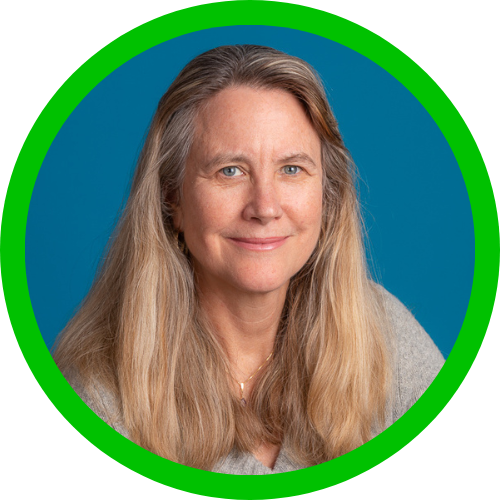
Dr. Price is a Professor of Geography and International Affairs at the George Washington University where she has taught since 1990. A Latin American and migration specialist, her studies have explored human migration, natural resource use, environmental conservation, and regional development. She is a non-resident fellow of the Migration Policy Institute, a non-partisan think tank that focuses on immigration issues based in Washington, DC. Her publications include the co-authored book Migrants’ Inclusion in Cities: Innovative Urban Policies and Practices (2013, United Nations) that was a collaborative project with staff from UNESCO and UN-Habitat, a co-edited book Migrants to the Metropolis: The Rise of Immigrant Gateway Cities (2008, Syracuse University Press), and the co-authored textbooks Diversity Amid Globalization: World Regions, Environment and Development, 5th edition (2011, Pearson) and Globalization and Diversity: Geography of a Changing World, 4th edition (2013, Pearson). She has also published some 40 refereed articles and book chapters.

Bob Quinn was raised on a 2,400 acre family operated wheat and cattle ranch South-East of Big Sandy, Montana which was started by his Grandpa Quinn in 1920. He earned a BS in botany in 1970 and a MS in plant pathology in 1971 from Montana State University in Bozeman. He received a PhD in plant biochemistry at the University of California at Davis, California in 1976 and returned home to run the family farm and ranch in 1978. In 1983 Bob started Montana Flour & Grains, Inc. (MFG) to sell high protein wheat from his farm to whole grain bakeries. In 1986 MFG introduced an ancient organic wheat using the brand name, Kamut (see kamut.com for a complete description of this project). In 2012 he started the Oil Barn which produces high-oleic organic safflower oil on his farm and in 2015, Big Sandy Organics (BSO) which produces Kracklin’ Kamut ancient wheat snacks. In 2001 he and two partners from Germany formed WindPark Solutions America which was responsible for the development of Montana’s first large scale wind farm of 90 turbines totaling 130 megawatts.
In 1988 Bob converted his entire farm to regenerative organic operation. He is 75 and has been married for 51 years. He and his wife, Ann, have four daughters, one son and 20 grandchildren. He is active in many organizations locally, nationally and internationally which promote organic agriculture and has received many awards from these groups.
He recently wrote “Grain by Grain” with his co-author, Liz Carlisle which summarizes his philosophy of the tie between agriculture, food and health and the importance of local production of fuel and fuel. He is now working to create a 700-acre regenerative organic research and education center in the middle of his farm.

Wesley J. Reisser is a member of the State Department’s civil service, where he has spent the past eleven years working mostly on Middle Eastern issues and the United Nations, including work on Israel-Palestinian negotiations, Syria, and Iran, as well as working on developing foreign policy to address the rights of lesbian, gay, bisexual, and transgender people around the world. Dr. Reisser holds a Bachelors Degree, Summa Cum Laude and Phi Beta Kappa, in International Affairs and History from The George Washington University, and a Masters Degree in Geography from the same institution that focuses on borders and peace settlements. In 2010, he completed a Ph.D. in Geography from UCLA with a dissertation on American border proposals and peacemaking efforts following World War I. Dr. Reisser teaches geography at the George Washington University, including courses on political geography and energy resources. He is a regular lecturer on Middle East Geography, Multilateral Diplomacy, and Middle East Peace at the State Department’s Foreign Service Institute. His first book, “The Black Book: Woodrow Wilson’s Secret Plan for Peace” was published in April, 2012. Besides his professional work, in 2011 Dr. Reisser founded an Eastern European dance group in Washington, DC called the Carpathia Folk Dance Ensemble, and is the 2007 National Geography Bowl Champion.

Michael Rich, MD, MPH, is a Senior Global Health Physician at Partners In Health with more than twenty years of experience in medical program design and implementation, confronting and responding to global health inequities. He is a founding member of Plants-Earth-Life (PEL), which works towards a world that eats more plant-based whole-food for better human and environmental health. Dr. Rich holds his medical degree from the University of Massachusetts Medical School and a Master’s in Public Health from Harvard School of Public Health. He presently is an Assistant Professor at Harvard Medical School and an Associate Clinician at the Division of Global Health Equity, Mass General Brigham, Boston MA, USA.

Dr. Cynthia Rosenzweig is a Senior Research Scientist at the NASA Goddard Institute for Space Studies and the co-located Columbia University Climate School’s Center for Climate Systems Research. Dr. Rosenzweig’s specific area of expertise is climate change and food systems. At NASA GISS, she heads the Climate Impacts Group whose mission is to investigate the interactions of climate (both variability and change) on systems and sectors important to human well-being. Dr. Rosenzweig is the co-founder and member of the Executive Committee of the Agricultural Model Intercomparison and Improvement Project (AgMIP), a globally integrated transdisciplinary study of climate change and the food system at regional, national and global scales, including the participation of over 1000 leading researchers from developed and developing nations. She has developed new methods of detection and attribution of observed changes in physical and biological systems to anthropogenic greenhouse gas emissions and pioneered research on the impacts of and adaptation to climate change and climate variability. In 2019, Dr. Rosenzweig was Coordinating Lead Author of the Food Security Chapter for the IPCC Special Report on Climate Change and Land. She is the 2022 recipient of the World Food Prize, considered as the “Nobel Prize for Food and Agriculture.”

Daniel Russek is CEO and founder of Atarraya, a company working to make shrimp the protein of the 21st century. Russek was trained as an economist but developed an early attachment to the Oaxacan coast in Mexico while in college. While handing out post-hurricane relief supplies, he was shocked at the poverty in that area. To help these rural populations to improve their income and living standards, Daniel launched his first company Maricultura Vigas in 2010, which uses sustainable technology to produce shrimp. Later on, he founded Atarraya in 2019 to revitalize the aquaculture industry. Atarraya uses biotechnology, software, and automation, to redefine the limits of what is possible in seafood production and distribution.

Kathleen Schroeder is a Professor of Geography at Appalachian State University in beautiful Boone, North Carolina. She has spent a good deal of time in Latin America and particularly in Bolivia where she has conducted research since her graduate student days. She teaches at both the undergraduate and graduate levels and has held a number of leadership positions on her campus, including serving as Department Chair. She conducts research on food, food systems, resilience, and on issues of gender. She actively participates in the local food movement in her region and saw how access to local foods played a critical role during the early days of the Covid-19 Pandemic.

Dr. Kunwar Singh is a Geospatial Scientist at the AidData research lab and an Affiliate Faculty in the Center for Geospatial Analysis at William & Mary. He has extensive experience in remote sensing data acquisition, processing, and analysis, including the application of light detection and ranging and drones to measure, map, and model landscape characteristics and resources. His research focuses on land and vegetation dynamics and their impacts on natural resources.

Karen Seto is the Frederick C. Hixon Professor of Geography and Urbanization Science at Yale University’s School of the Environment. A geographer, and an urban and land change scientist, she is one of the world's leading experts on contemporary urbanization and global environmental change. Her research includes the effects of urbanization on food systems, biodiversity, croplands, energy use and GHG emissions. She serves on numerous national and international scientific bodies. She currently co-chairs the U.S. National Academies Climate Security Roundtable and the U.S. National Academies Subcommittee on U.S.-China Scientific Engagement. She was a Coordinating Lead Author for the IPCC 6th (2022) and 5th (2014) Assessment Reports, where she co-led the chapter on urban mitigation of climate change. She is an elected member of the U.S. National Academy of Sciences, the American Academy of Arts and Sciences, the Connecticut Academy of Science and Engineering, and a Fellow with the American Association for the Advancement of Science.

Dr. Christopher Tucker manages Yale House Ventures, a portfolio of social ventures and technology companies that span the worlds of energy, geospatial, sensor, cyber-security, open source, and social media technologies, across the domains of defense/intelligence, international affairs, civilian government, commercial industry, NGOs, and academe. He is also the Chairman and CEO of The MapStory Foundation and President of the foreign policy advocacy group, Friends of the Arc.
Dr. Tucker was previously Senior VP for the Americas/National Programs at ERDAS and President/CEO of IONIC, a leader in interoperable web-mapping, location based services, imagery management and distributed geoprocessing. He has served on a variety of Boards such as the US Geospatial Intelligence Foundation, the Open Geospatial Consortium, Open Plans, OpenGeo, the Secretary of Interior’s National Geospatial Advisory Committee, and the Defense Science Board Intelligence Task Force, the DNI’s Intelligence Community Strategic Studies Group, and serves as an Independent Advisor to the Director of the National Geospatial Intelligence Agency (NGA). Dr. Tucker served on the National Academy of Science’s Committee on NGA’s GEOINT Research Priorities.
Dr. Tucker was Chief Strategic Officer of In-Q-Tel, the CIA’s venture capital fund. He was responsible for managing the technical portfolio, issues of organizational design, and relations with the intelligence community, industry and media.
As Special Advisor to the Executive Vice Provost of Columbia University, Dr. Tucker was responsible for a range of issues having to do with strategic institutional development, portfolio management, federal science and technology policy, and the organization of interdisciplinary research. At Columbia, he co-founded the Center for Science, Policy, and Outcomes and has taught courses at the Columbia School of International and Public Affairs. Dr. Tucker earned his B.A., M.A., and Ph.D. at Columbia University in the City of New York.

As chief executive officer at the National Geographic Society, Dr. Jill Tiefenthaler oversees the development and implementation of the Society’s mission-driven work and programmatic agenda. She leads our global community of Explorers: scientists, innovators, educators, and storytellers—in our mission to illuminate and protect the wonder of our world. Jill sits on the Society’s Board of Trustees and the board of National Geographic Partners.
Before joining the National Geographic Society, Jill spent nine years as the president of Colorado College. During this time, she helped set a new direction for the school, executed the most ambitious fundraising campaign in the college’s history, and developed and implemented a comprehensive strategic plan that expanded and cultivated an engaged and globally connected academic community. She developed a Campus Master Plan, executed an alliance to make the world-class Colorado Springs Fine Arts Center part of the college, and led the college’s efforts to achieve carbon neutrality. She also drove significant increases in diversity among the faculty and student body and led the campus community in an external review of racism at the college that resulted in an Antiracism Implementation Plan.
Before leading Colorado College, Jill was provost of Wake Forest University, where she redesigned the admissions process to include an SAT-optional policy, integrated the university’s undergraduate and graduate business schools, established the Institute for Public Engagement and The Humanities Institute, and implemented “Living Our Values,” a plan to strengthen residential life and campus vibrancy.
Jill began her academic career at Colgate University, where she was a full professor of economics before holding various administrative roles, including consultant to the president; associate dean of the faculty; founding director of the Upstate Institute; and chair of the department of economics.
Originally from Iowa, Jill grew up on a farm and worked for her family’s popcorn business before attending Saint Mary’s College in Notre Dame, IN. She received her M.A. and Ph.D. in economics from Duke University.

Vice Admiral Frank Whitworth is the eighth Director of the National Geospatial-Intelligence Agency. He leads and directs NGA under the authorities of the Secretary of Defense and Director of National Intelligence. He became NGA’s director on June 3, 2022.
Whitworth is a 1989 graduate of Duke University Durham, North Carolina, with a Bachelor of Arts in Political Science. He holds a Master of Arts in National Security Studies from Georgetown University, Washington, District of Columbia, as well as a diploma from the Naval War College in Newport, Rhode Island.
Whitworth’s command tours included commander, Joint Intelligence Center Central; commanding officer, Navy Element of U.S. Central Command; and commanding officer, Kennedy Irregular Warfare Center.
Whitworth’s operational tours included director of Intelligence for The Joint Staff, U.S. Africa Command, Joint Special Operations Command and Naval Special Warfare Development Group; director of Intelligence and deputy director of Maritime Operations Center for Commander, U.S. Naval Forces Central Command, U.S. Fifth Fleet; director of Intelligence for a Special Operations Task Force in Afghanistan during three deployments supporting Operation Enduring Freedom; and special assistant for Political-Military Affairs at U.S. Sixth Fleet during Operation Allied Force.

Dean Wise joined BNSF as vice president, Network Strategy, in February 2010. BNSF Railway, a Berkshire Hathaway company, is one of North America’s leading freight transportation companies operating on 32,500 route miles of track in 28 states and three Canadian provinces, integral to the global supply chains of mining, utility, agricultural, industrial, and consumer products industries. Dean was previously President and managing partner at Norbridge, Inc., a management a consulting firm focusing on the freight transport and logistics industry. Prior to joining Norbridge, he was vice president of Mercer Management Consulting, now Oliver Wyman. Dean’s prior experience also includes management positions at Temple Barker & Sloane, Inc., Conrail and Southern Pacific Transportation Company. He holds a Bachelor’s degree in Geography from Colgate University and a Master’s degree from the Graduate School of Design at Harvard University.

Dr. WinklerPrins is a geographer currently serving as the Deputy Division Director for the Behavioral and Cognitive Sciences Division of the Social, Behavioral and Economic Sciences Directorate at the (US) National Science Foundation. She is also an Adjunct Professor in the Environmental Sciences and Policy Program in the Johns Hopkins University Krieger School of Arts and Sciences Advanced Academic Programs where she teaches a course on sustainable food systems. She was on the faculty of the Department of Geography, Environment, and Spatial Sciences at Michigan State University for 13 years. Originally from the Netherlands, Dr. WinklerPrins has lived and worked in numerous places around the world. A people-environment geographer, her research focus has focused on agricultural livelihoods and soils, environmental knowledge, and urban agriculture, especially in tropical locations. She has published in a wide variety of outlets, most recently she edited the book (with Kent Mathewson) Forest, Field, and Fallow: Selections by W.M. Denevan and published an article entitled “Reframing Pre-European Amazonia through an Anthropocene Lens” with Brazilian ecologist Carolina Levis in the special issue on the Anthropocene of the Annals of the American Association of Geographers Vol. 111(3): 858-868.

An accomplished architect by training, Nona built Vertical Harvest from the ground up as North America’s first vertical hydroponic greenhouse. She also pioneered the company to focus on inclusive, customized employment for people with physical and/or intellectual disabilities alongside her co-founder Caroline Croft-Estay. She conceived the company based on her experiences growing up with a brother with developmental disabilities, love of fresh and local food, obsession with great design and long-standing community involvement. Since then CNN has named her a Champion for Change and in 2021 Vertical Harvest was included in Fast Company’s World Changing Ideas in both their Food and Social Justice categories. Under her stewardship, and with the closing of Series A, the company has embarked on its ambitious plans to scale to 10 new cities over the next 5 years and advance its mission to use food as a medium for positive change.

Janine believes in making more accurate, more relevant, and more engaging maps to build a better shared understanding of the world. Most recently, she led the location-based Augmented Reality program at Snapchat, where she connected new AR technology and 3D maps to local communities and venues. Prior to Snapchat, Janine was the Chief Operating Officer at Mapillary, a street-level imagery platform acquired by Facebook in June 2020. At Mapillary, Janine worked with mapping and navigation platforms, government agencies, GIS providers, NGOs, and location-based apps to get the most out of street-level imagery. Before Mapillary, Janine worked on strategic partnerships at Google and Yahoo, then scaled two startups toward successful exits.

Andrew oversees Global Impact Initiatives at Planet, working to ensure that the company’s data, products and services achieve their highest humanitarian, sustainable development and scientific potential. He works closely with all parts of the company and with the United Nations, NGOs, philanthropies, conservation organizations, and disaster response entities to incubate and deliver new forms of social and environmental impact. Andrew is also the author of the bestselling book Resilience: Why Things Bounce Back. He received a BA in Cognitive and Computer Science at Vassar College, and did graduate studies in foresight at the University of
Houston.